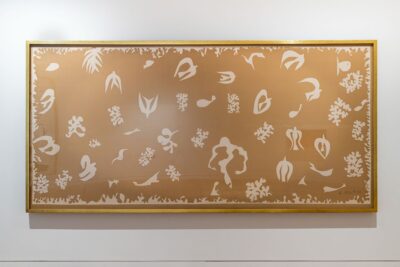
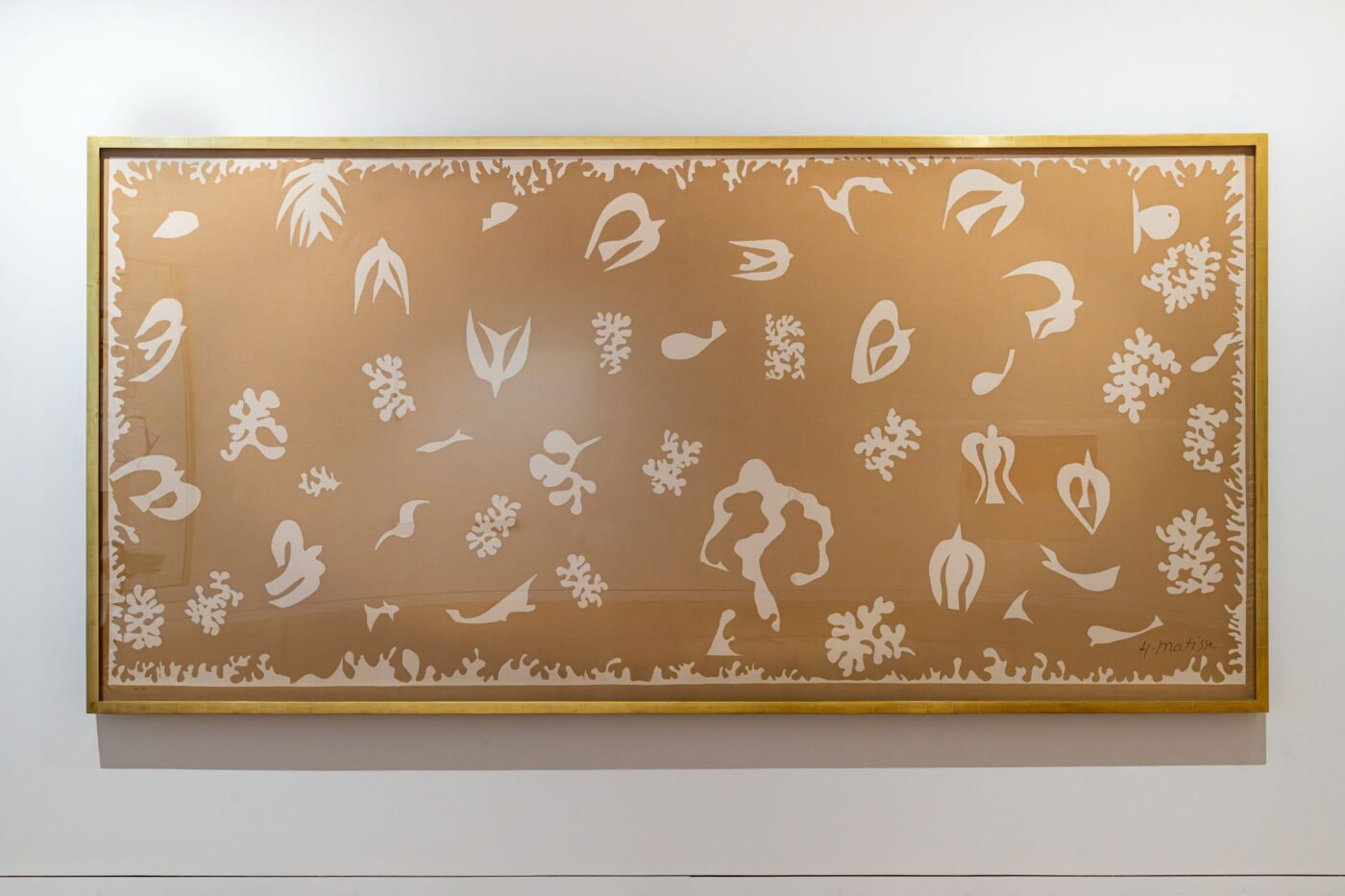
The Colby College Museum of Art is pleased to announce the gift of Henri Matisse’s Océanie, le ciel, a monumental screenprint on linen conceived in 1946 and printed in 1948. The significant acquisition reinforces Colby’s position as a leading academic art museum and adds to Maine’s growing profile as a major destination for American and international art.
This landmark acquisition is a gift from Josephine Merrill Eastman and the Eastman family—in honor of Colby President David A. Greene.
“There are few families that have had a more profound impact on artists and the arts more generally than the Eastmans,” said President Greene. “They have spent a lifetime protecting the rights of artists to own their creative and intellectual property. It was a radical notion when they fought and won their first cases, and throughout their lives they have supported the arts in compelling and innovative ways. One of my great privileges in life is to know three generations of the Eastman family. In their quiet but determined ways, they are always improving the lives of others. Receiving this gift is a profound honor, and we do so with eternal gratitude.”
This acquisition brings a major work by Matisse into the Museum’s collection, substantially expanding its engagement with one of modernism’s central figures. The scale and significance of Océanie, le ciel further elevate the museum’s standing among peer institutions. A monumental Matisse of this caliber is rarely found outside a small number of the world’s foremost museums.
Océanie, le ciel stands as a pivotal work in the French artist’s late career, crystallizing his shift toward a “painting with scissors” cutout technique, or papier découpé, that would define his final decade. This mural-sized work was inspired by Matisse’s 1930 trip to Tahiti, where the intensity of light and the “enchantments” of the sea and sky left a lasting impression. These recollections are distilled into a vocabulary of highly abstracted marine forms—including fish, coral, and aquatic plants—contained within a rhythmic border of seaweed-like motifs. Matisse composed the work in situ by pinning cut-paper motifs directly
to adjoining walls in his studio, marking the first time he worked in large-scale paper compositions in a process now considered a medium in its own right. He would adjust the shapes until achieving a dynamic equilibrium.
Please join the Maine Museum of Photographic Arts on Friday, July 24, from 5-8 pm for an elegant evening of art and ideas. We are hosting a panel discussion with artists in the LOOKING AT YOU exhibition: featuring Jack Montgomery, Barbara Peacock, Richard Wexler, Jan Pieter van Voorst van Beest, Bret Woodard , Arlene Collins […]
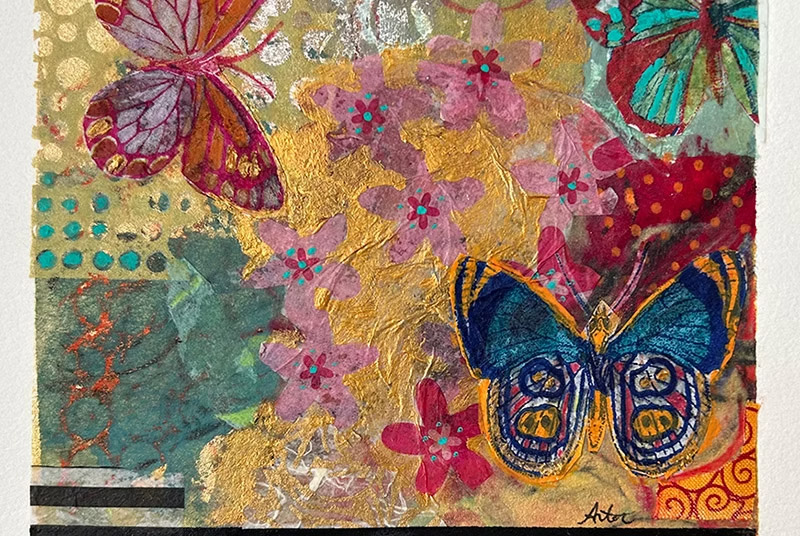
Summer is the perfect time to pull out the paints and pencils, and even tissue and glue for experimentation or to develop one’s creative talents. Upcoming classes at the Maine Art Gallery offer three opportunities to expand your abilities. In “Charcoal and Line: Drawing the Landscape,” both intermediate beginners and those with more advanced […]
The Colby College Museum of Art is pleased to announce the gift of Henri Matisse’s Océanie, le ciel, a monumental screenprint on linen conceived in 1946 and printed in 1948. The significant acquisition reinforces Colby’s position as a leading academic art museum and adds to Maine’s growing profile as a major destination for American and […]
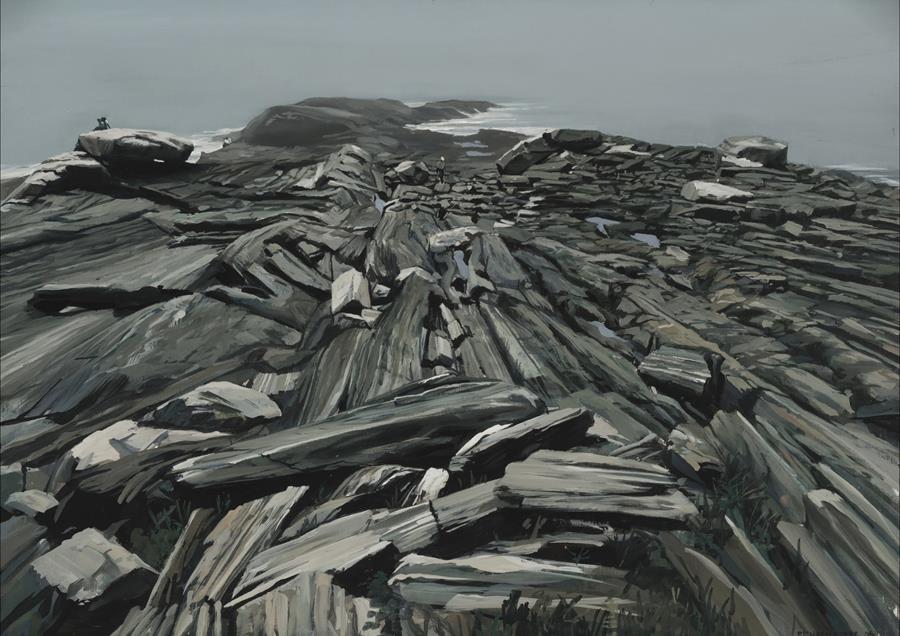
Richard Estes (born 1932) is best known for his complex photo-realistic images of urban shop windows and their mind-eye confounding reflections. However, his work also attests to a well-traveled eye for distant places, including Mount Desert Island and Lake Champlain. While helping Alice Walton select artworks destined for the permanent collection of Crystal Bridges […]
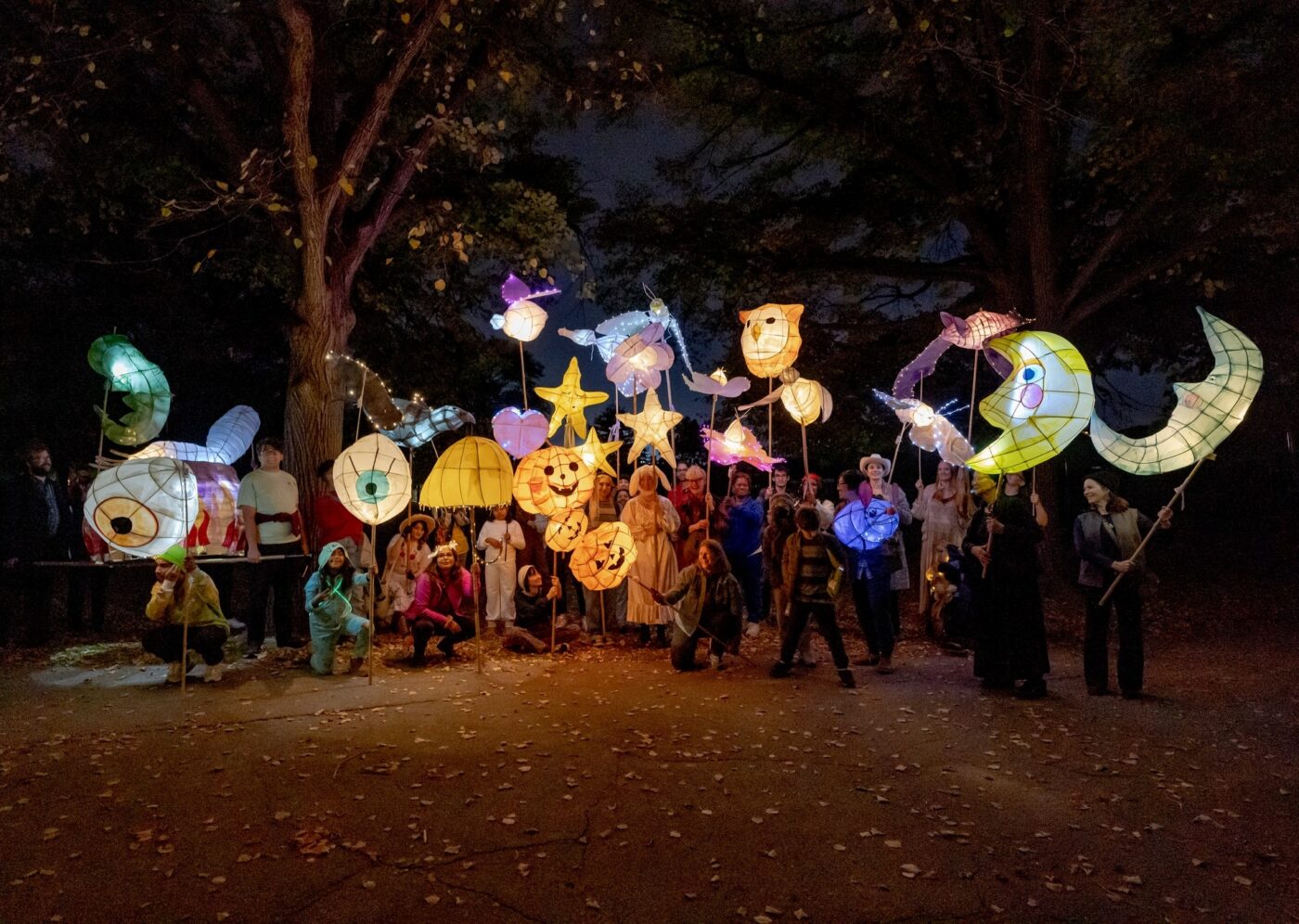
Waterfall Arts in Belfast invites the community to explore creativity, craftsmanship and collective imagination through PLAY, a season of workshops, exhibitions and special events featuring nationally recognized artists Valeska Populoh and Mark Matthews. From illuminated lantern parades to crafted glass spheres, the visiting artists bring decades of experience and a shared belief that art has […]

The Center for Maine Contemporary Art in Rockland has named Rori Smith as its new director of education. Smith brings nearly two decades of experience as an educator, scholar and artist, having worked with institutions including the Penn Museum, the Smithsonian Center for Folklife and Cultural Heritage, the National Museum of the American Indian and […]
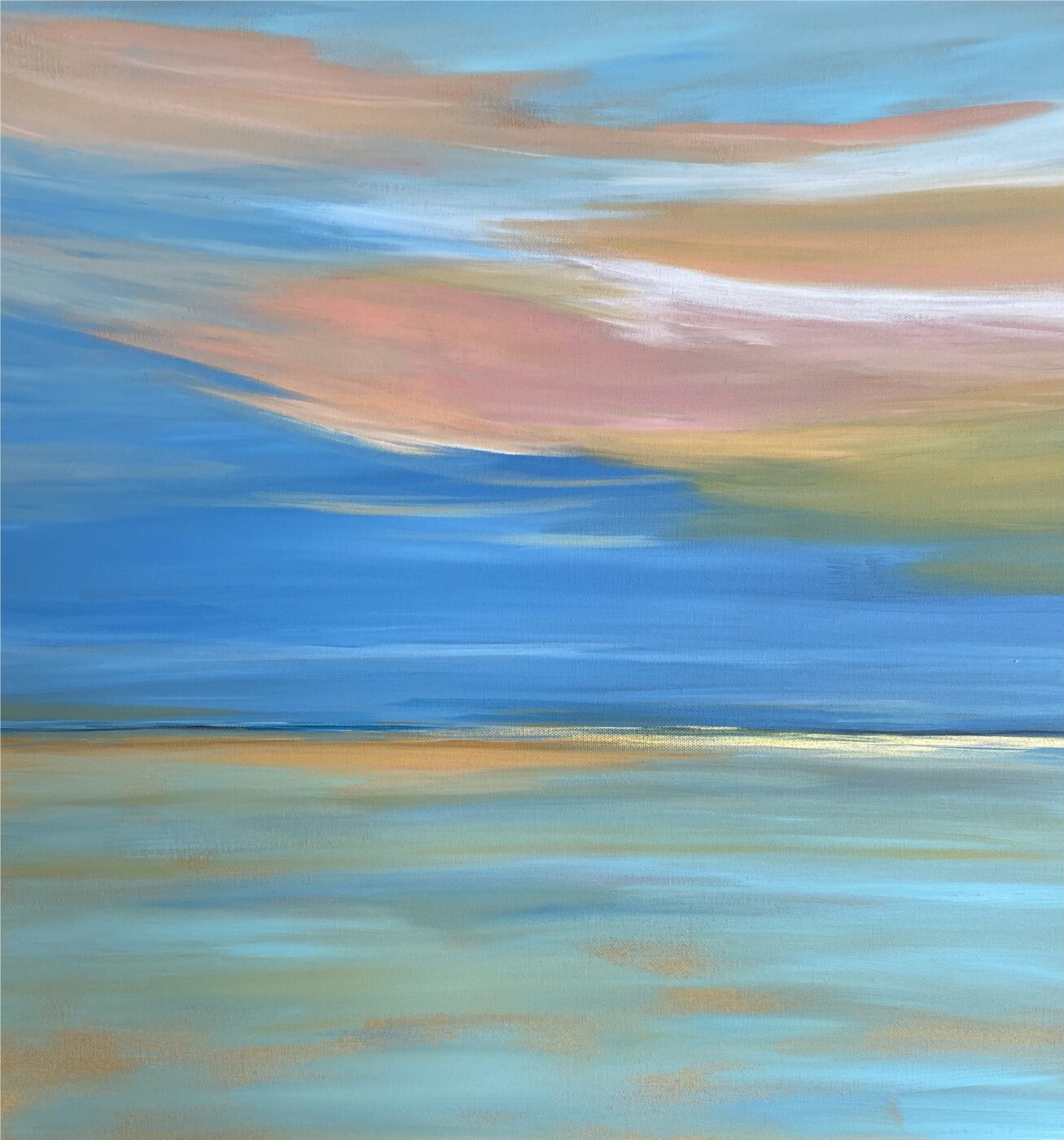
Kittery Art Association presents “Lucid Coastline” through Aug. 2 at its gallery in Kittery. The exhibition explores the many ways artists interpret the shifting moods of the coast. From abstraction to realism, each work reveals a personal dialogue with nature’s edge — the lucid space between the tangible and the transcendent. An opening reception was […]
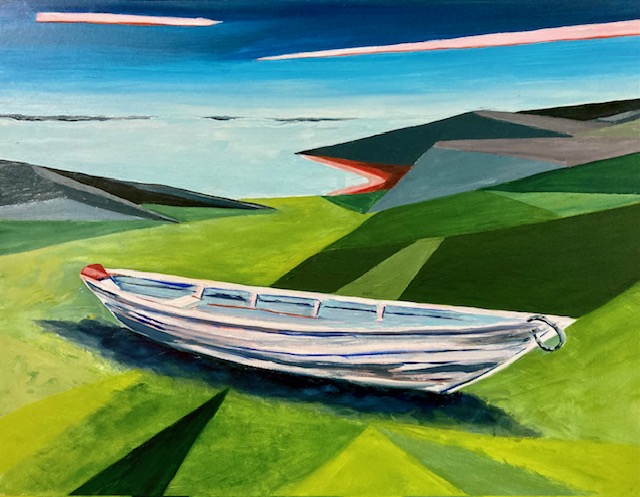
Jean Kigel Studio + Gallery in Waldoboro is currently featuring “Patchwork,” an oil painting by Jean Kigel. A few years ago, Kigel was one of 11 artists chosen to spend a day painting on Allen Island, six miles off Port Clyde. “I had passed this bleak island many times en route to Monhegan and had […]
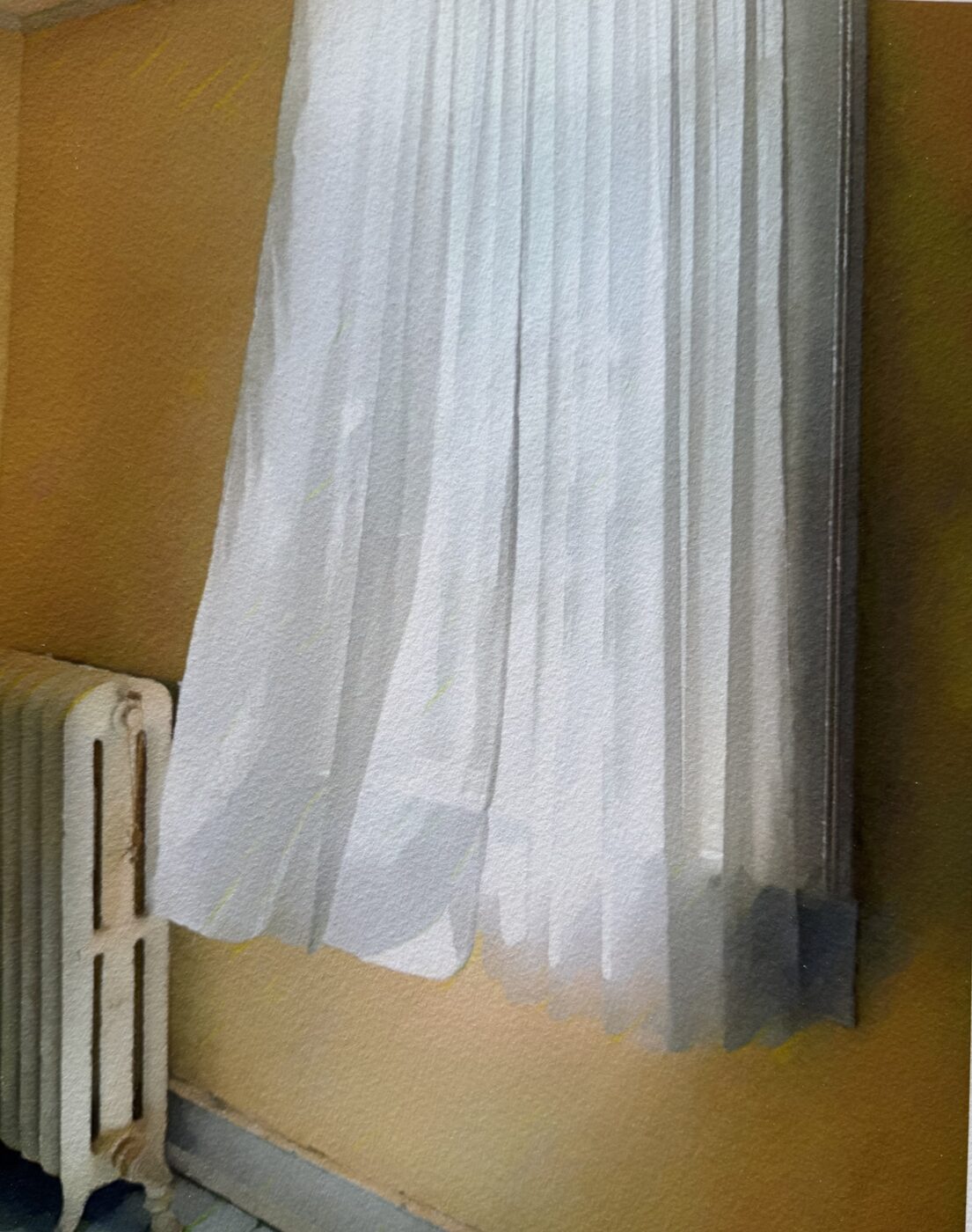
The Union of Maine Visual Artists will present “Dreaming at Dawn,” an exhibition inspired by daybreak in Maine, from Aug. 1 to Sept. 30 at Bangor Public Library. The exhibition features 68 pieces by 51 artists from across the state, with work installed in the library’s Cyr, Stairwell and Lecture Hall galleries. Interpretations of the […]

Receive news and information about Maine artists and events delivered right to your inbox.