

The Center for Maine Contemporary Art’s summer season launches with ambition, presenting three concurrent exhibitions that collectively demonstrate contemporary art’s capacity to transform both space and perception. Opening May 24 with a public reception from 3 to 5 p.m., the exhibitions offer visitors multiple entry points into current artistic practice.
“Cheek to Cheek” by Nicole Wittenberg represents the season’s most overtly sensual offering. Taking its title from Irving Berlin’s 1935 song, the exhibition surrounds viewers with mural-sized floral paintings that, as Wittenberg notes, aim to create “romance pictures.” Her transition from erotic figurative work to these lush botanical compositions reflects time spent in coastal Maine, where encounters with roadside wildflowers inspired a new direction.
The paintings’ scale transforms CMCA’s Main Gallery into an immersive environment where visitors experience what Wittenberg calls “interlocking forms that overlay to create a massing of stems, flowers, and leaves.” Her description of these as “Baroque images” points to their compositional complexity, where individual elements spiral together into unified wholes.
Known for her previous erotic works of figures in the landscape, in recent years, Wittenberg has spent long periods each summer immersed in the landscape of coastal Maine, where she encountered the wildflowers that serve as references for her current imagery. Capturing their ephemeral nature in quick pastel studies created on-site, the artist uses these small-scale drawings as jumping off points for the mural-sized paintings created in her studio. Wittenberg reflects, “Wildflowers like these grow on the side of the road; they seem to portray the feeling of our time, a flower that grows without tending and returns year-after-year, despite our best efforts to contain them or weed them out.”

Taking its title from the iconic 1935 song composed by Irving Berlin, for his musical Top Hat, “heaven, I’m in heaven, and my heart beats so that I can hardly speak …” the exhibition at CMCA embraces the viewer in the heart-stopping sensuousness of Wittenberg’s floral compositions. Vibrating with energy, the seductive, electric-hued blooms fill the canvas and the eye. The artist “sees these new paintings as a group of interlocking forms that overlay to create a massing of stems, flowers, and leaves — in that way, these are Baroque images, where the ‘parts’ of the painting fit together and spiral upwards.”
“Cheek to Cheek” is curated by CMCA executive director and chief curator emeritus Suzette McAvoy.
“The shape of memory” by Carlie Trosclair offers a more conceptually challenging experience. The Ellis-Beauregard Foundation Fellow creates installations using latex cast from architectural and natural surfaces, creating what might be called “architectural ghosts.” Her process — painting liquid latex onto surfaces, allowing it to dry, then peeling it away — results in translucent amber forms that carry traces of their original contexts.
Trosclair’s background as the daughter of an electrician working in historic New Orleans properties informs her understanding of architecture as vulnerable, temporary, subject to climate and circumstance. Her latex sculptures transform this vulnerability into poetic meditation on memory, place, and the psychology of home.
Metaphor is essential to Trosclair’s work: architecture as body, architectural surface as skin, latex as skin, the domestic space as a vessel of memory and past lives. The resulting sculptures and installations explore the vulnerability and ephemerality of home, as both a physical space and a concept. The poetic takes on a visceral existence in Trosclair’s ghostly sculptures — created by painting liquid latex onto manmade and natural surfaces, allowing it to dry, and then peeling it away. The milky liquid (tapped from rubber trees), applied in multiple layers, dries to a translucent amber. At times, the latex picks up color from the original surface; in other works, the artist adds natural pigment to suggest the passage of time.
Trosclair, the daughter of an electrician, recalls spending her childhood in historic New Orleans residential properties at varying stages of construction and renovation. These memories go hand in hand with the impacts of the Gulf Coast climate, where one is perpetually subjected to evacuation and uncertain return. The repeated act of leaving home and belongings behind led Trosclair to consider closely the haptics of memory and the psychology of place. In recent work, Trosclair expands the notion of regenerative cycles and home beyond the built environment, exploring a symbiotic relationship with the broader landscape.
The show reflects both the universal and specific aspects of Troslair’s practice, and evokes the dual — and often dueling — aspects of our world: culture (the man-made) and nature. “Chrysalis: Reflections on the Interstitial” (2019) is a double porch cast from a historic shotgun house in New Orleans. A design reflective of its tropical climate, the traditional shotgun house was made to receive and expel air; for Trosclair, the idea of home as a breathing body. Rootrise (2025) is a cascading banister hung from the ceiling, its spindles transitioning in form and color from architecture into outgrowing vines and tree branches. The evocative roots in Echoes beneath (2025) morph into remnants of furniture and cast-iron railing, latex ghosts of man-made household and building fragments. Trosclair is an alchemist in all her work, transforming the ordinary into the extraordinary, decay and destruction into ghostly and fantastical creations.
“Leaf Litter” by Elizabeth Atterbury completes the trio with sculptures that explore how objects accumulate meaning over time. Her practice embraces both deliberate planning and intuitive response, creating works that examine how forms can be “reworked, recontextualized, and transformed through material and scale.”
The concurrent presentation of these three distinct approaches creates an unusual opportunity to experience contemporary art’s diversity within a single institution. Each exhibition offers its own rewards, but their proximity creates productive dialogue about scale, materiality, and the relationship between art and lived experience.
CMCA is located at 21 Winter Street, Rockland. Summer hours: Monday through Saturday, 10 a.m. to 5 p.m.; Sunday, noon to 5 p.m. For more information, go to cmcanow.org.
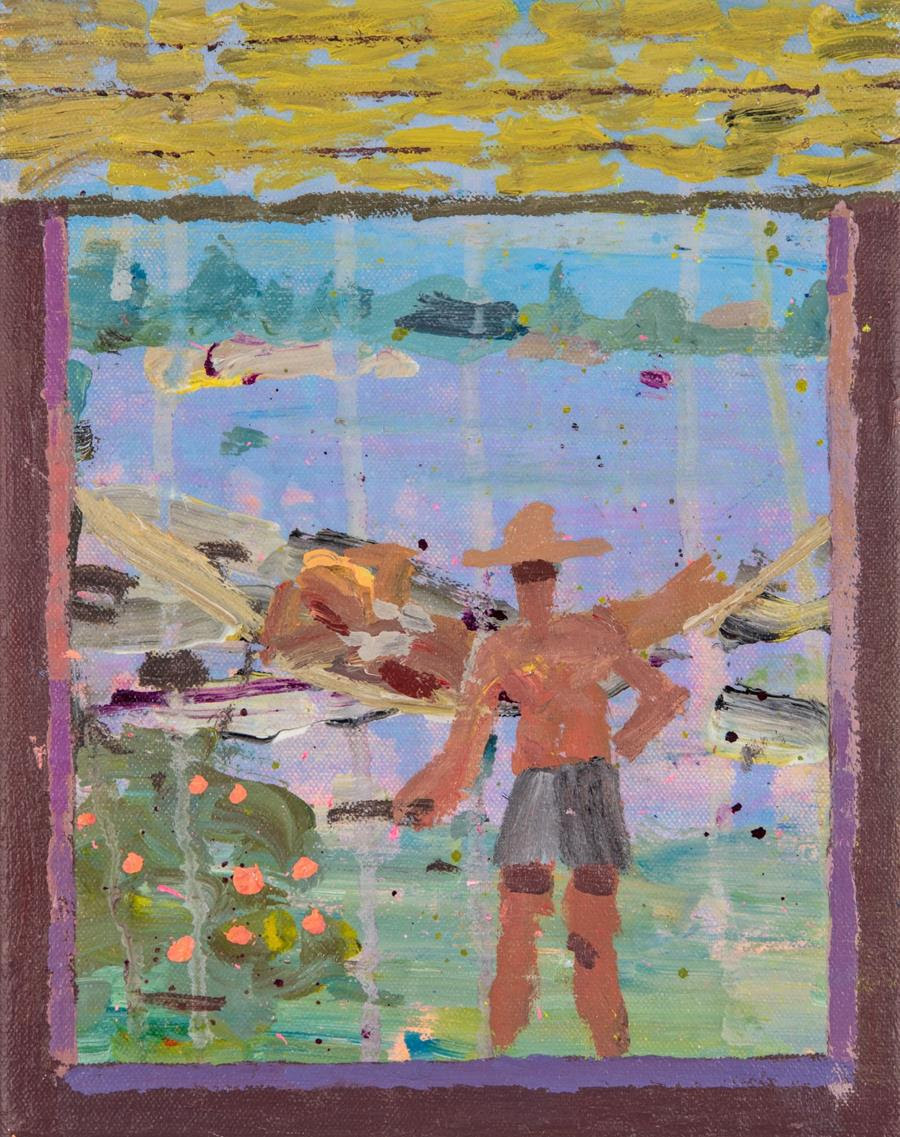
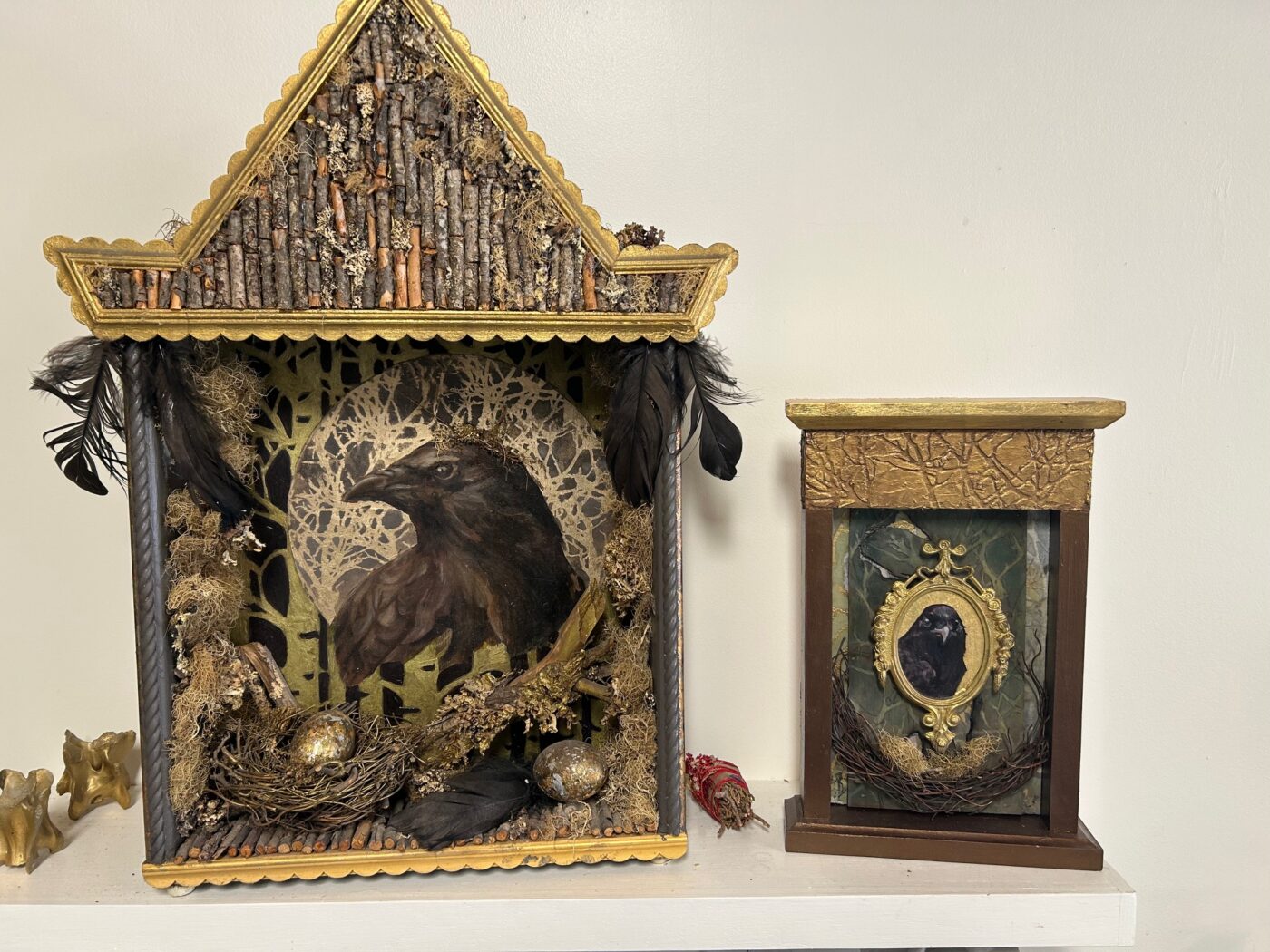
Dowling Walsh Gallery in Rockland is featuring “IDK,” an exhibition of paintings by Tollef Runquist that explores the intersection of personal reflection, archetypes, fantasy and play. Runquist’s paintings combine images and symbols drawn from lived experience, emotional landscapes and cultural influences, creating an intuitive dialogue between imagery and meaning. “My work explores a space where […]
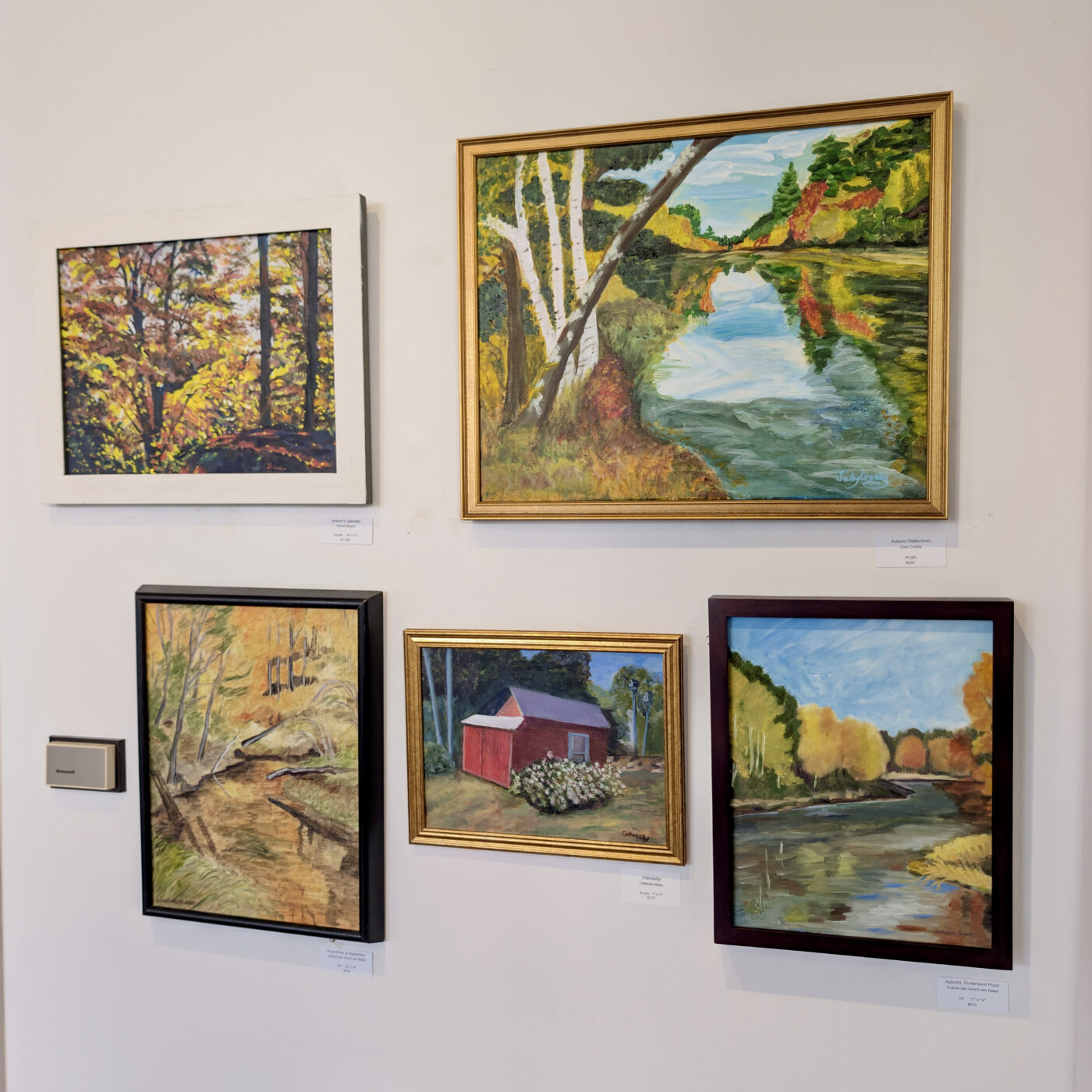
Meetinghouse Arts in Freeport is presenting a full schedule of fall exhibitions and performances, including a members show, a collaborative exhibition by longtime artist friends Tim Sample and Linda Rowell-Kelley and several concerts. The gallery’s fall members exhibition, “Nature’s Palette: Art Inspired by the Season,” will remain on view through Oct. 18. Featuring paintings, drawings, […]
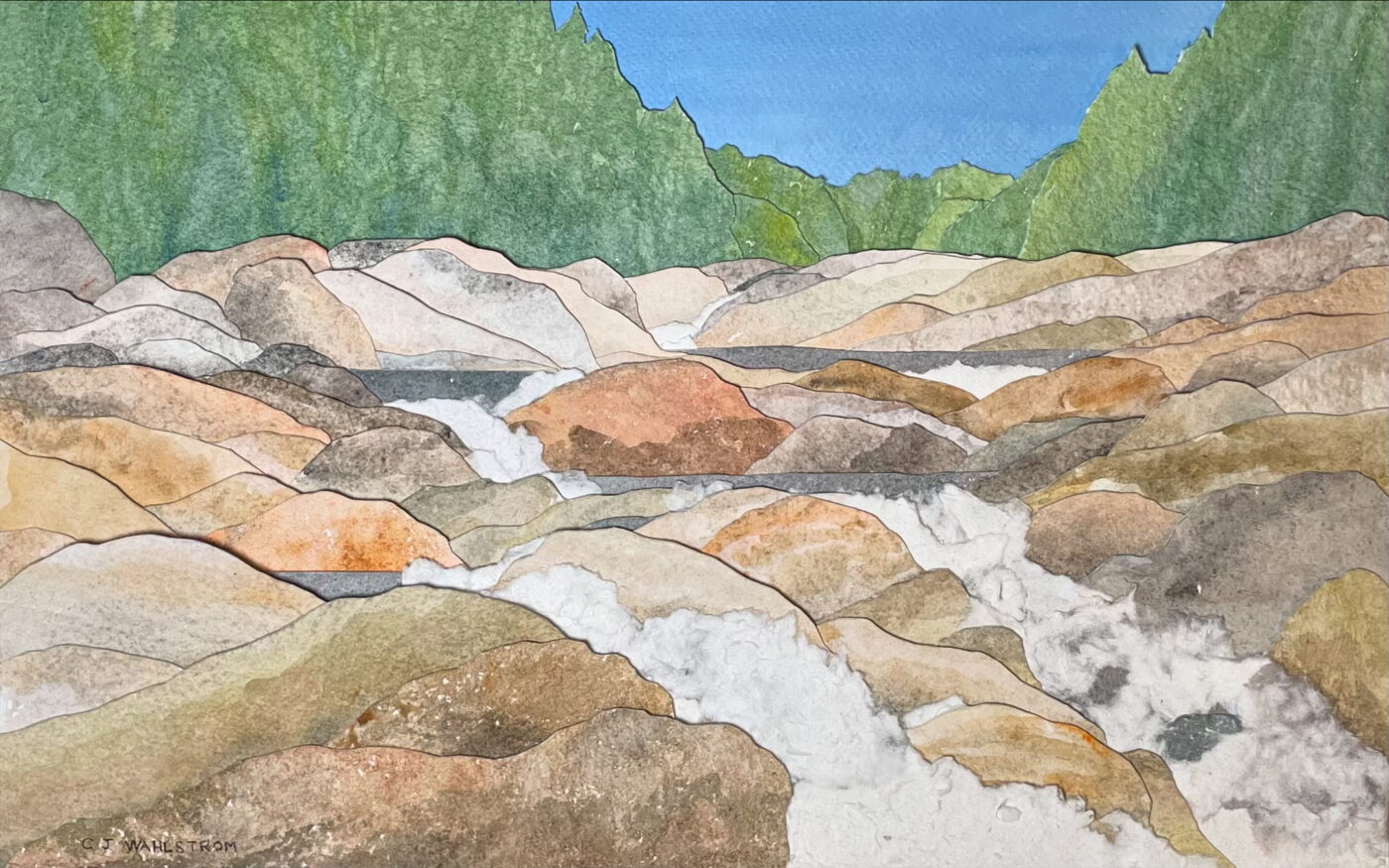
Local Color Gallery in Belfast will feature printmaker, collage artist and sculptor Jeff Wahlstrom from Oct. 19 to Nov. 22. An Art Walk reception will be held from 4 to 7 p.m. Oct. 23, with an artist talk at 5 p.m. Based in Bangor, Wahlstrom creates block prints and watercolor collages inspired by the natural […]
Women Eco Artists Dialog (WEAD), based in Berkeley, California, is accepting submissions for its 2027 members exhibition, “Prototyping Futures of Making: Water, Data, and Living Systems.” The exhibition will explore the relationships among water, data, ecological systems and emerging technologies, asking how artists can engage with living systems as sites of collaboration, construction and consequence. […]
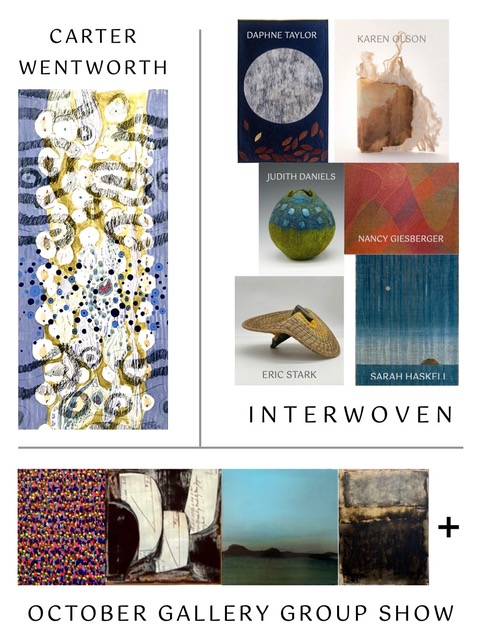
Triangle Gallery in Rockland is presenting three exhibitions through Oct. 31, including an extended solo exhibition by Carter Wentworth, a group fiber arts show and a fall exhibition of work by gallery artists. Wentworth’s “Sound of Rain Crossing the Lake” will remain on view in the upstairs gallery through the end of October. “Interwoven,” a […]
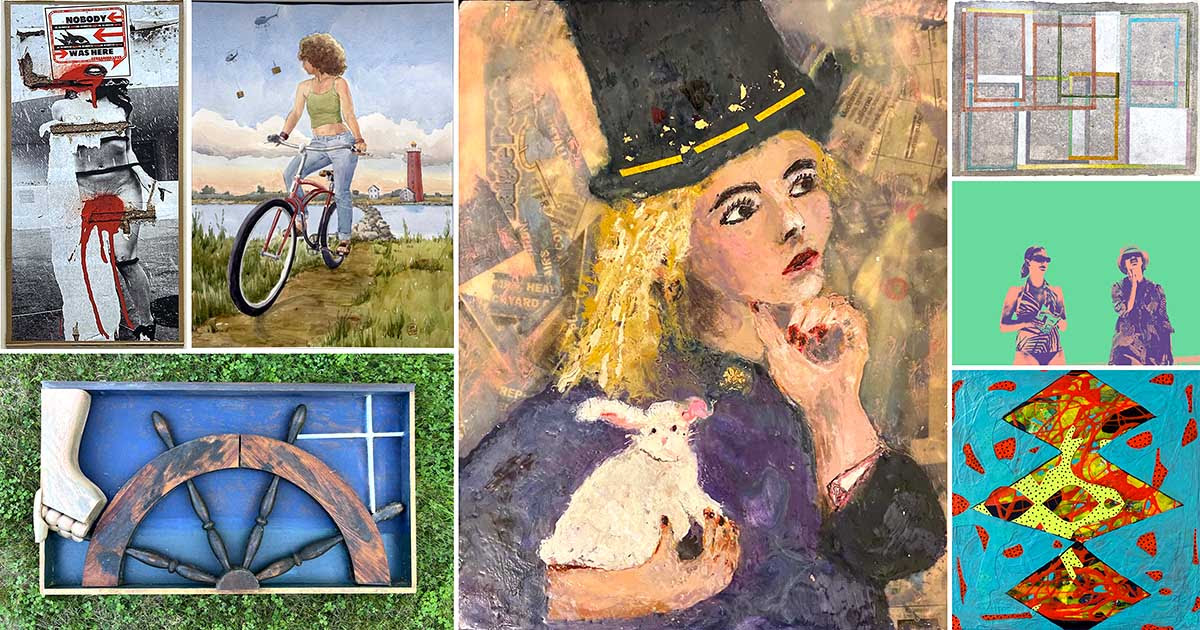
Waterfall Arts in Belfast will present “Found in Translation,” a mixed-media exhibition featuring Maine artists Deborah Jellison, JoAnne Houlsen and John LeBlanc, from Oct. 23 to Nov. 28. An opening reception will be held from 5 to 7 p.m. Oct. 23. The exhibition brings together three artist friends whose work explores familiar Maine landscapes, objects […]
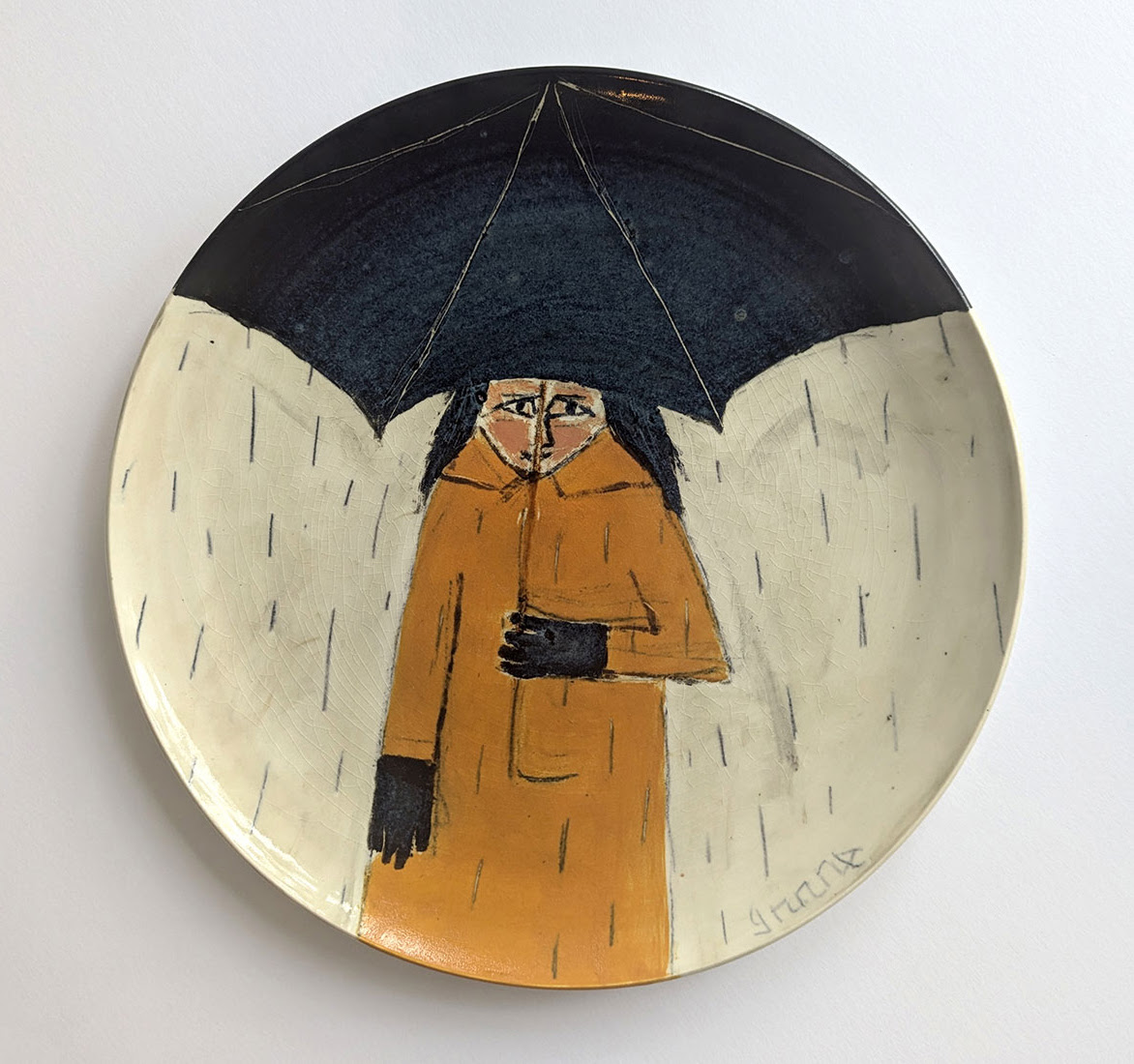
Courthouse Gallery Fine Art in Ellsworth is presenting “Form Meets Surface,” an exhibition highlighting porcelain ceramics by potter Mark Bell and collaborative works created with painter William Irvine. The artists, both established in their respective fields, have worked together since 2015 to create porcelain vases and plates that combine Bell’s ceramic forms with Irvine’s painted […]
Barn Gallery in Ogunquit concluded its 2026 exhibition season Oct. 12, but the venue will continue to welcome visitors for two performances in the 19th annual Elizabeth Dunaway Burnham Piano Festival. Pianist, composer and vocalist Zahili Zamora will return to Ogunquit with her Afro Cuban Jazz Trio for a performance from 7:30 to 9:30 p.m. […]
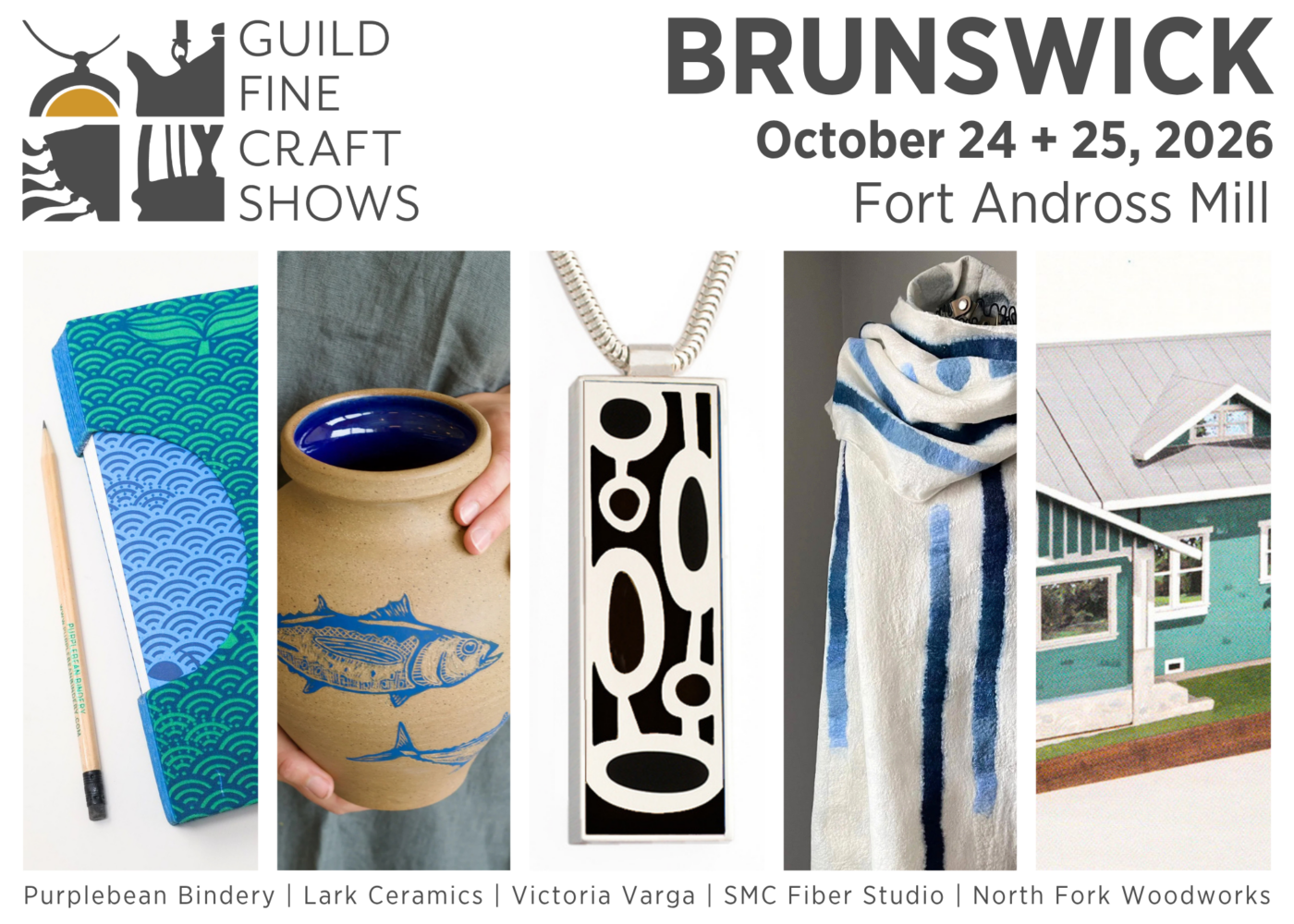
The Brunswick Guild Fine Craft Show will return to the historic Fort Andross Mill in Brunswick on Oct. 24 and 25, celebrating its 10th season with work by 40 juried Maine craft artists. Presented by Shop Maine Craft, the indoor show will feature basketry, ceramics, decorative and wearable fiber art, furniture, glass, jewelry, mixed media, […]

Receive news and information about Maine artists and events delivered right to your inbox.