
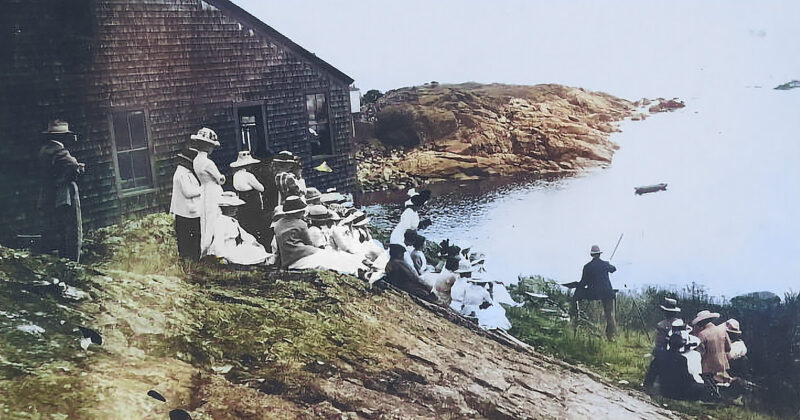
The summer of 1932 cast a unique light on the quaint coastal town of Ogunquit. Anticipation crackled in the air, a buzz unlike the usual rhythm of crashing waves and creaking lobster traps. This wasn’t a season for tourists seeking lazy afternoons on the beach; this was a pilgrimage for an astronomical spectacle: a total solar eclipse.
This celestial event, cutting a diagonal swath through New England from Montreal to Provincetown — with the path of totality passing directly over Ogunquit — stirred anticipation among locals and visitors alike. Among the throngs in Ogunquit to witness the sun’s spectacular vanishing act was summer resident and artist Charles H. Woodbury.
But Woodbury wasn’t your average eclipse chaser. He was the individual most credited with initially establishing and giving momentum to the Ogunquit Art Colony, a thriving artist community that took shape during the late 19th century. The Ogunquit Art Colony played a crucial and well-documented role in the development of American art. Artists at the colony often painted en plein air, capturing the natural beauty of the coastal landscape.
Woodbury, with his Ogunquit Summer School of Drawing and Painting, helped shape the town’s enduring cultural identity. In 1928, Woodbury, alongside Gertrude Fiske and other prominent artists, founded the Ogunquit Art Association (OAA), Maine’s original artists’ group.
As August approached, New England was abuzz with eclipse fever. Newspapers splashed headlines about “eclipse packages” and special trains ferrying eager skywatchers. The Great Depression cast a long shadow, but the eclipse offered a fleeting escape, a chance to witness nature’s grand drama.
“The total phase begins with the sweep of the moon’s shadow over the earth, just like the coming of a great storm,” reported the Exeter News-Letter. “This shadow travels from west to east with a speed of 1500 miles an hour. As the sun finally disappears its eastern edge is sometimes broken up by bright patches of light. The sunlight creeps through the lunar valleys and produces only for an instant, the ‘Baily’s Beads,’ as these light flashes are called.”
“Hotels and boarding houses will be taxed to capacity, and many will doubtless prolong their stay over the eventful day. For dwellers in Boston and other points out of the belt of totality, there will be special train service.”
Almost everyone was making plans to head to the path of totality for the eclipse to witness this once-in-a-lifetime phenomenon.
Woodbury, however, possessed a different kind of curiosity. His son, David O. Woodbury, described him as having a “remarkable eye-skill,” and on this momentous day, Woodbury intended to put it to a unique test. Woodbury isn’t interested in painting the eclipse itself. Instead, he’s brewing a bold artistic experiment.
Woodbury, a man who reveled in the play of light, envisioned capturing the eclipse’s effect, not on the sun, but on the landscape itself.
On that fateful Aug. 31, Woodbury didn’t set up his easel facing the sky. Instead, with his back to the spectacle, he positioned himself facing a rocky outcrop. With six pochades (portable easels) lined up and his paints at the ready, he embarked on a rapid-fire painting session, capturing not of the sun’s disappearance, but of the dramatic shift in light and shadow that bathed the landscape during the celestial event.
David recalled his father’s fascination with the eclipse, witnessing him paint with fervor as the landscape transformed before his eyes: “In 1932, I watched him in fascination as he painted six pictures of the total solar eclipse in less than two hours,” stated David O. Woodbury. “Only one of them was done during totality, which lasted about fifty seconds. They were small panels, to be sure, but they gave an accurate record of the extraordinary events of color and shifting light that spread over the sea and shore as the sunlight faded and the reflected sky light from the sea horizon took command… The only eclipse pictures I know of that did not include the vanishing sun. He had kept his back to it all the time. What my father wanted from that exercise in swift recording was a meaningful explanation of the curious sense of doom that marches across the world ‘when the sun blots out at noon.’ He got it, unmistakably. He captured that rare event in motion, moving inexorably forward to destroy the familiar stability of the everyday world. No artist could possibly have done it who could not keep up with the changes of light and form, the rapidly failing brilliance and the shadows that moved across the spectrum rather than across the land.”
“He was fascinated with the play of light,” stated Woodbury’s grandson, Chris Woodbury. “In 1932, there was a total eclipse of the sun in Ogunquit. He painted six pictures to show the changing of the light (during the eclipse), the different stages of light. He painted very fast. ‘You must get this before the shadows move and the colors change’, he told his students. … As usual — he found a new approach. While other painters carefully sketched what was left of the sun, around the moon’s limb, Father turned his back on it and painted a cliff and its inverted shadows, proving that all were warm, and the sky light cold. It was an invaluable contribution to science and the extraordinary panel, all six sketches lined up together, hangs now in the Adler Planetarium and Astronomical Museum in Chicago. An announcement by Philip Fox, Director, reads on the frame: ‘A great artist’s impressions of light and color changes during a solar eclipse. Paintings by Charles H. Woodbury made at Ogunquit, Me., during the eclipse of 31 August, 1932.’”
The resulting series, a unique contribution to eclipse paintings, reflects Woodbury’s artistic vision. Each canvas, labeled with the specific time (“2:30. Before the Eclipse.” “3:00. Half Hour before Totality.” “3:30. Totality.” “3:45. Quarter Hour After totality.” “4:30. After the Eclipse.”), offers a glimpse into the dramatic transformation of the ordinary into the extraordinary. We see the warm hues slowly draining from the scene as the moon devours the sun, replaced by an ethereal, cool light emanating from the horizon. These paintings aren’t just mere depictions of an eclipse; they fully expose the acumen of Woodbury’s keen eye for the subtle dance of light and a scientific study translated onto canvas.
Woodbury’s genius lay in his subtlety. Through his observations, he’d stumbled upon a scientific revelation. The light filtering through the moon during a total eclipse, he discovered, reversed the usual conditions, exhibiting a form of polarization. This groundbreaking observation, a testament to Woodbury’s keen eye, had never been documented by artists before. He had, in essence, used his art to make a scientific contribution.
These extraordinary paintings embody Woodbury’s pioneering spirit — and the think-outside-the-box ethos of the Ogunquit Art Colony. The paintings stand as a unique record of a celestial event, capturing the invisible and the fleeting through the power of observation and artistic expression. This story exemplifies the transformative power of looking beyond the obvious, a lesson that continues to resonate with artists and scientists alike. Charles H. Woodbury’s eclipse series is a reminder that art can transcend aesthetics, pushing the boundaries of perception and scientific inquiry.
Even now, as visitors stroll through Perkins Cove, in the shadow of the Charles H. Woodbury Studio, they can’t help but feel the echoes of Woodbury’s brushstrokes in the shimmering light and shifting shadows. His legacy endures not only in his prolific array of timeless artworks but also in the spirit of exploration and innovation that continues to animate the Ogunquit Art Colony and the Ogunquit Art Association Barn Gallery to this day.
Eric Taubert is a fine art photographer and writer (taubertgallery.com) and a juried member of the Ogunquit Art Association. He is also the founder of Barometer Media. Visit him on Twitter @erictaubert.
May 10 to 12 — “44th Annual Student Art Show”
4 to 6 p.m. May 10 — “44th Annual Student Art Show” Reception
1 to 4 p.m. May 11 and 12 — “44th Annual Student Art Show”
May 22 to June 22 — “Opening Exhibitions”
OAA Expressions
Showcases Lou Kohl Morgan (painting), Lennie Mullaney (painting) and invited New England sculptors
May 25 (4 to 7:30 p.m.) — “Gala Reception for Opening Exhibitions”
June 3 — OAA New Member Applications due
June 23 — Open, Regional, Juried Show entries due
June 26 to July 27 — “Mid-Season Exhibitions”
Open, Regional, Juried Show
OAA Expressions
Invited New England sculptors
June 29 (4 to 7:30 p.m.) — “Gala Reception for Mid-Season Exhibitions”
July 31 / Aug. 1, 2, 3 — “70th OAA Art Auction Preview”
Aug. 3 “70th OAA Art Auction (doors open 6 p.m., auction begins 7 p.m.)
Aug. 7 to Sept. 7 — “Late Summer Exhibitions”
OAA Expressions
Showcases Shaune McCarthy (painting), Shiao Ping Wang (painting) and invited New England sculptors
Aug. 17 (4 to 7:30 p.m.) — Gala Reception for “Late Summer Exhibitions”
Sept. 11 to Oct. 14 — “Fall Exhibitions”
OAA Expressions
Showcases Merrill Black Aharonian (painting), Pat Gerkin (painting) and invited New England sculptors
Memorial Exhibition: Louis Rizzo
Sept. 14 (4 to 7:30 p.m.) — Gala Reception for “Fall Exhibitions”
Oct. 14 — “Indigenous People’s Day” Barn Gallery closes at 5 p.m. for the season.
Exhibitions, Receptions, and Gallery Talks are free. Demonstrations are free. Workshops are $60 plus materials fees as noted. No pre-registration needed unless noted.
Barn Gallery is at Shore Road and Bourne Lane in Ogunquit. For more information, call 207-646-8400, email oacbarngallery@gmail.com, or go to www.barngallery.org.
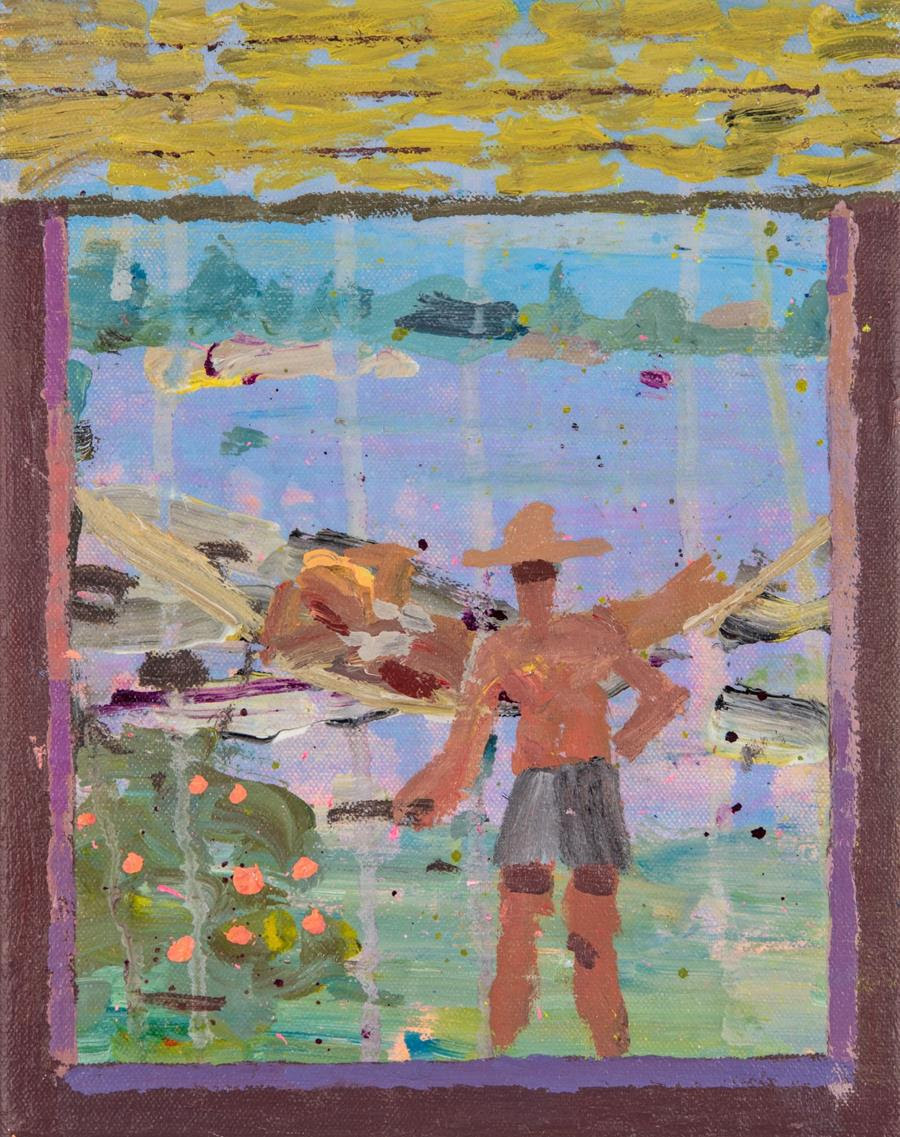
Dowling Walsh Gallery in Rockland is featuring “IDK,” an exhibition of paintings by Tollef Runquist that explores the intersection of personal reflection, archetypes, fantasy and play. Runquist’s paintings combine images and symbols drawn from lived experience, emotional landscapes and cultural influences, creating an intuitive dialogue between imagery and meaning. “My work explores a space where […]
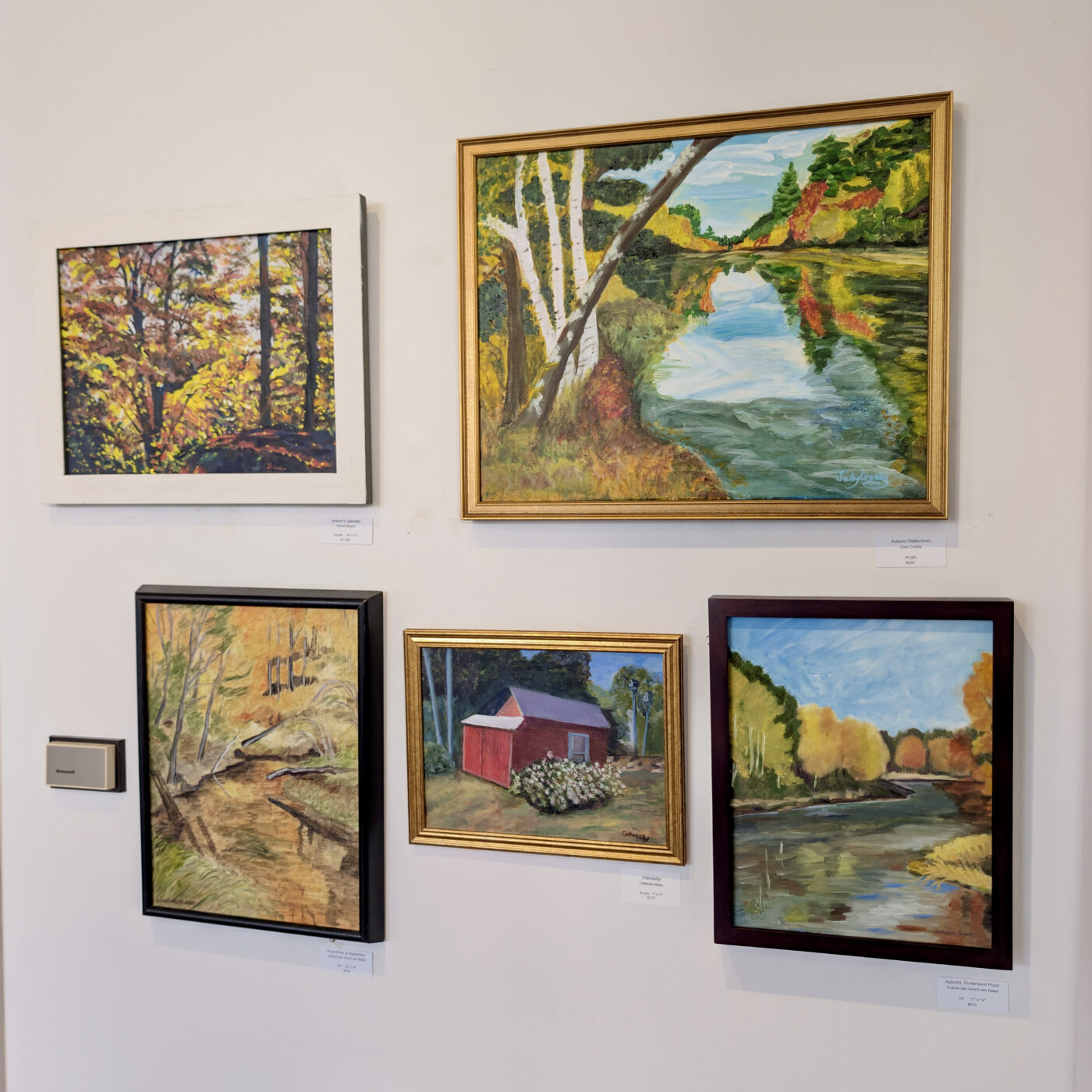
Meetinghouse Arts in Freeport is presenting a full schedule of fall exhibitions and performances, including a members show, a collaborative exhibition by longtime artist friends Tim Sample and Linda Rowell-Kelley and several concerts. The gallery’s fall members exhibition, “Nature’s Palette: Art Inspired by the Season,” will remain on view through Oct. 18. Featuring paintings, drawings, […]
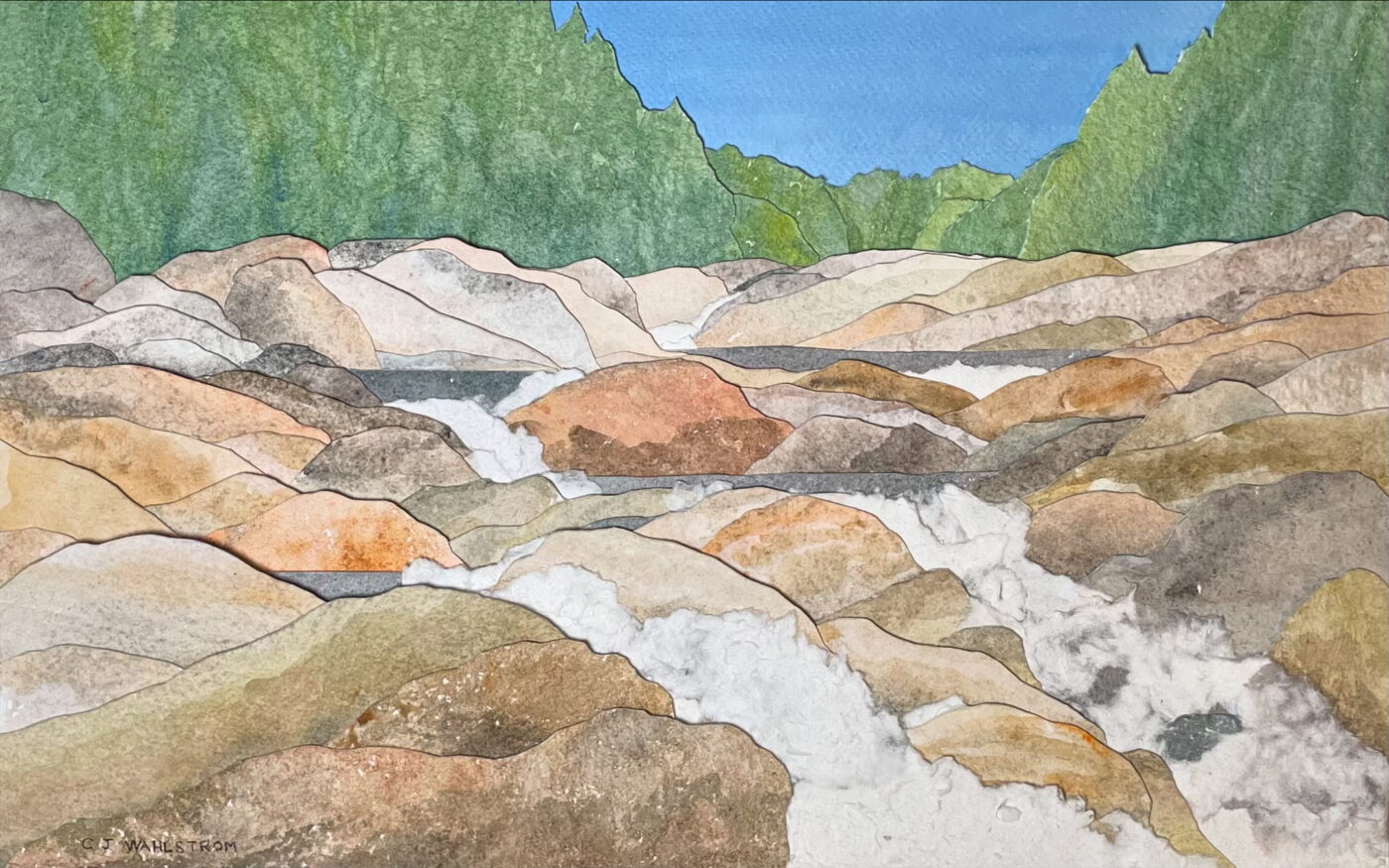
Local Color Gallery in Belfast will feature printmaker, collage artist and sculptor Jeff Wahlstrom from Oct. 19 to Nov. 22. An Art Walk reception will be held from 4 to 7 p.m. Oct. 23, with an artist talk at 5 p.m. Based in Bangor, Wahlstrom creates block prints and watercolor collages inspired by the natural […]
Women Eco Artists Dialog (WEAD), based in Berkeley, California, is accepting submissions for its 2027 members exhibition, “Prototyping Futures of Making: Water, Data, and Living Systems.” The exhibition will explore the relationships among water, data, ecological systems and emerging technologies, asking how artists can engage with living systems as sites of collaboration, construction and consequence. […]
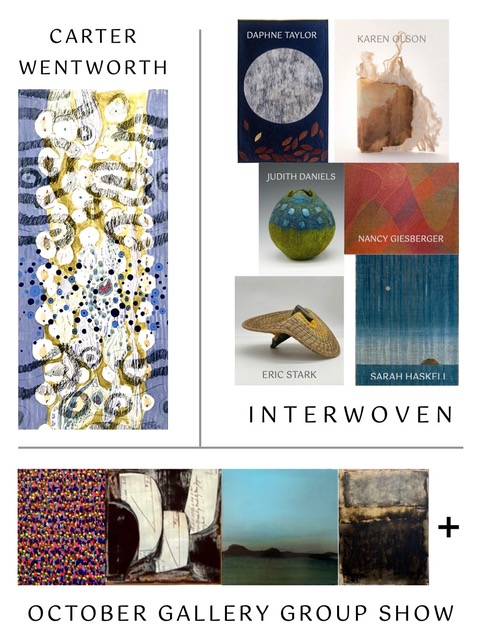
Triangle Gallery in Rockland is presenting three exhibitions through Oct. 31, including an extended solo exhibition by Carter Wentworth, a group fiber arts show and a fall exhibition of work by gallery artists. Wentworth’s “Sound of Rain Crossing the Lake” will remain on view in the upstairs gallery through the end of October. “Interwoven,” a […]
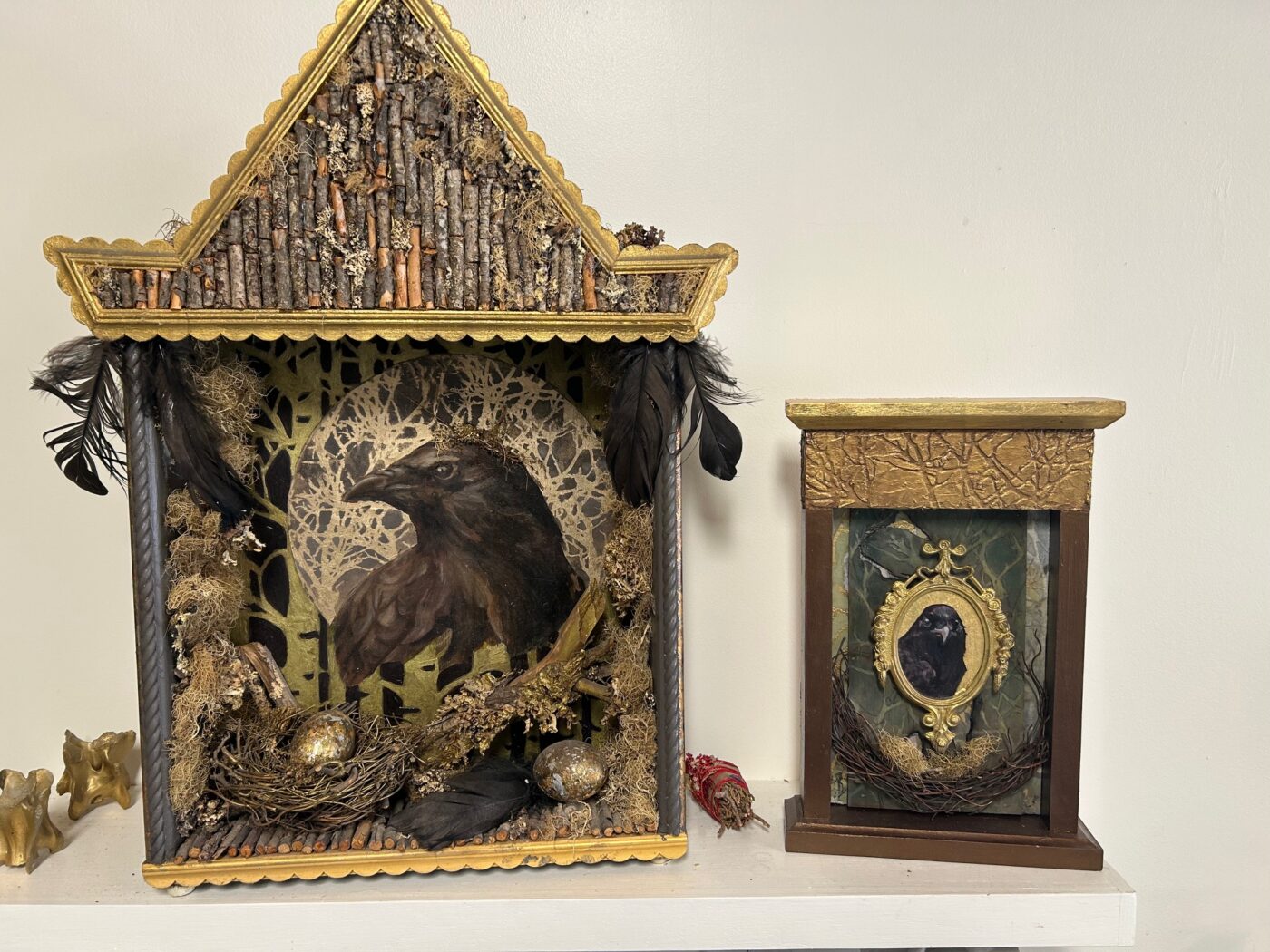
Waterfall Arts in Belfast will present “Found in Translation,” a mixed-media exhibition featuring Maine artists Deborah Jellison, JoAnne Houlsen and John LeBlanc, from Oct. 23 to Nov. 28. An opening reception will be held from 5 to 7 p.m. Oct. 23. The exhibition brings together three artist friends whose work explores familiar Maine landscapes, objects […]
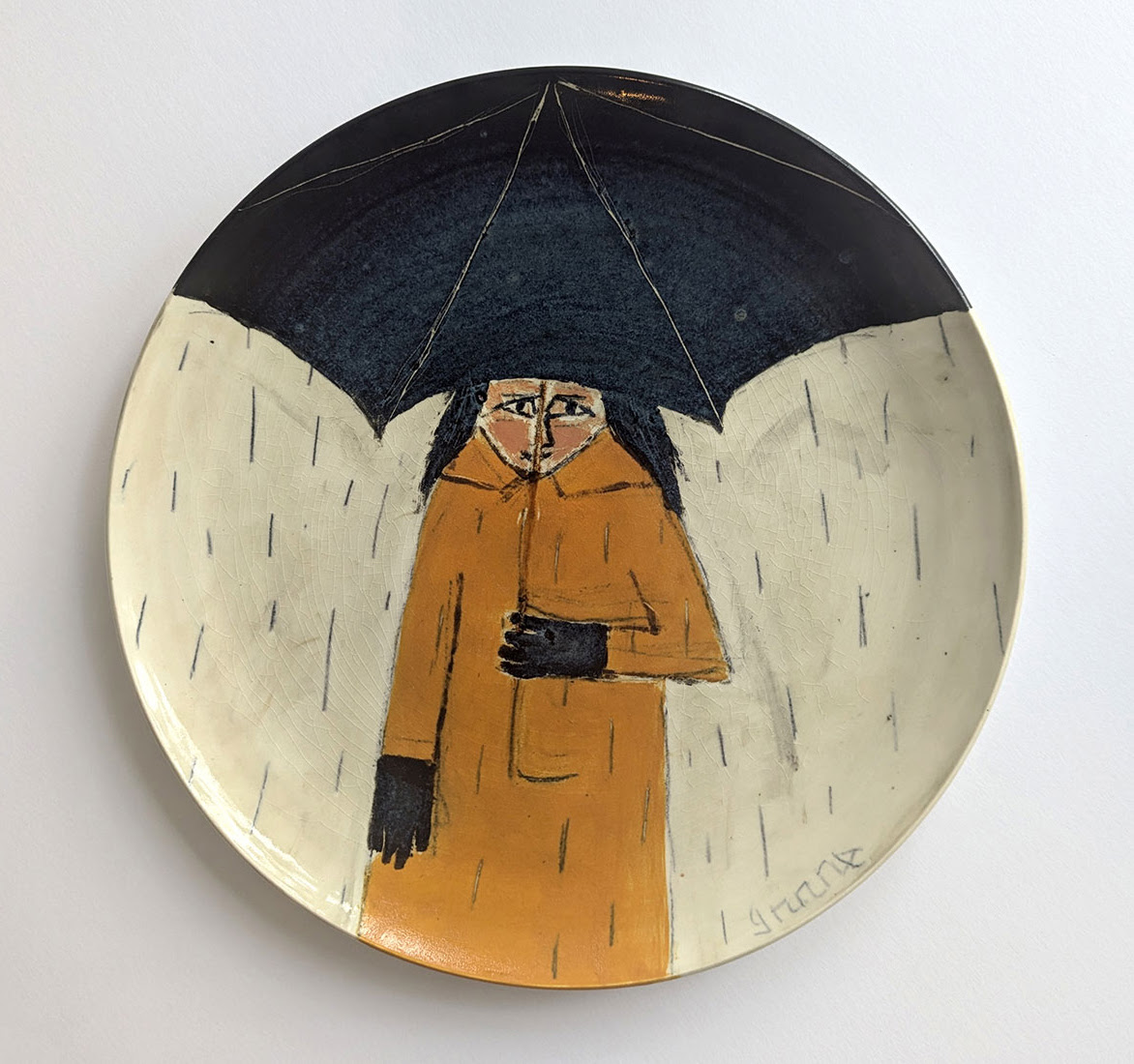
Courthouse Gallery Fine Art in Ellsworth is presenting “Form Meets Surface,” an exhibition highlighting porcelain ceramics by potter Mark Bell and collaborative works created with painter William Irvine. The artists, both established in their respective fields, have worked together since 2015 to create porcelain vases and plates that combine Bell’s ceramic forms with Irvine’s painted […]
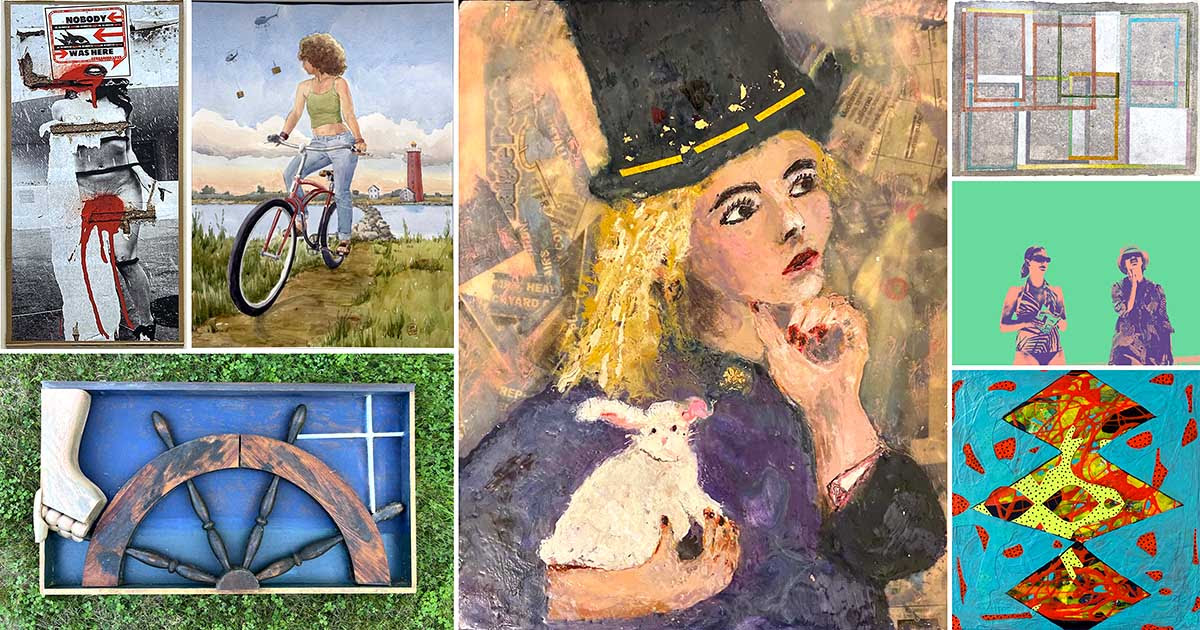
Barn Gallery in Ogunquit concluded its 2026 exhibition season Oct. 12, but the venue will continue to welcome visitors for two performances in the 19th annual Elizabeth Dunaway Burnham Piano Festival. Pianist, composer and vocalist Zahili Zamora will return to Ogunquit with her Afro Cuban Jazz Trio for a performance from 7:30 to 9:30 p.m. […]
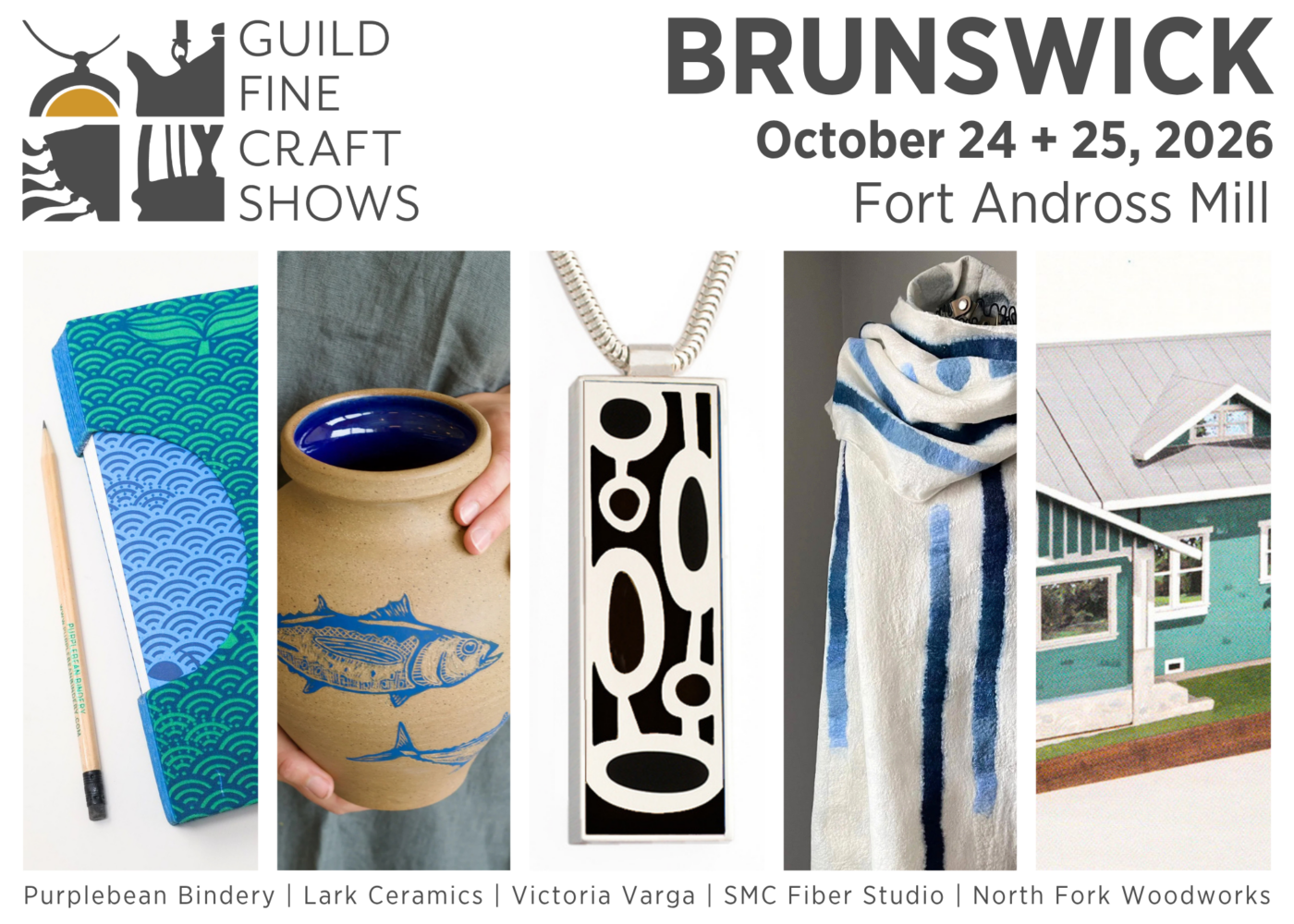
The Brunswick Guild Fine Craft Show will return to the historic Fort Andross Mill in Brunswick on Oct. 24 and 25, celebrating its 10th season with work by 40 juried Maine craft artists. Presented by Shop Maine Craft, the indoor show will feature basketry, ceramics, decorative and wearable fiber art, furniture, glass, jewelry, mixed media, […]

Receive news and information about Maine artists and events delivered right to your inbox.