
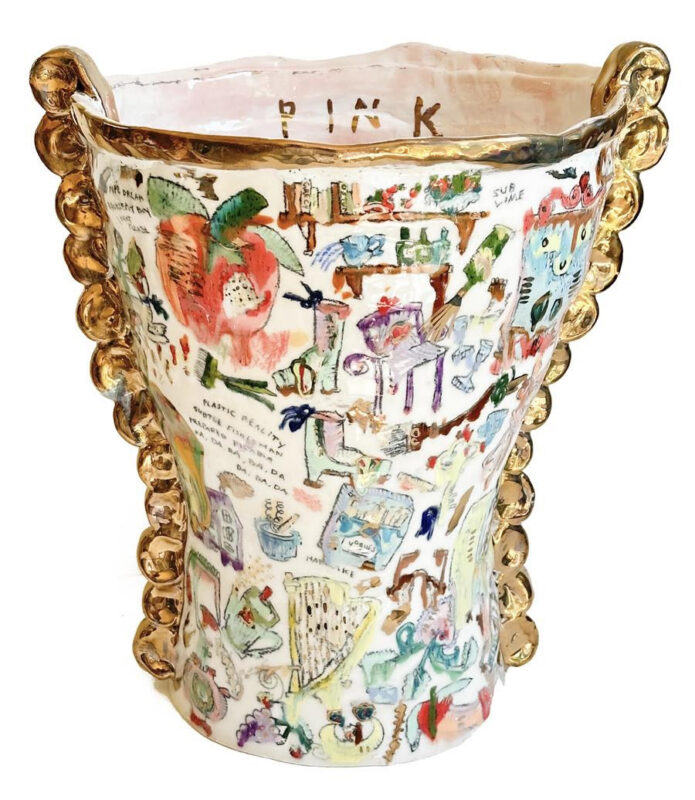
Dowling Walsh Gallery in Rockland will open “Would an Angel Apologize for Spilling Champagne?,” an exhibition of hand-built porcelain sculpture by Bowdoinham-based artist Dominique Ostuni, on Sept. 4.
The exhibition, Ostuni’s second solo show with Dowling Walsh, continues through Oct. 3. A public opening reception will be held from 4 to 7 p.m. Sept. 4 in conjunction with Rockland’s First Friday Art Walk.
Ostuni has created an immersive environment extending throughout the gallery’s first floor. In this body of work, she begins with familiar objects — lamps, mirrors, vessels and the figure — and pushes them beyond their expected functions.
“I’m interested in the moment when usefulness becomes unstable,” Ostuni said, “when an object can still perform its function but has begun to slip away from its original purpose, the moment when the object starts to misbehave.”
Working primarily in porcelain, Ostuni treats the ceramic surface like an enormous sheet of paper, drawing and gilding until function starts to wobble. The domestic becomes a stage for questions of taste, intimacy and value.
Recent works include bronze figures dancing atop ceramic lamps, porcelain elements surrounding an illuminated mirror nearly eight feet wide, tiered chandeliers extending into the room’s architecture and figures drawn from art history. Even the pedestal becomes part of the work, pierced with small chambers where figures can be encountered almost privately.
Across the exhibition, scale shifts from intimate to architectural while the artist’s hand remains visible. Ostuni is particularly drawn to historical forms such as spill vases — objects that have outlived much of their original usefulness but retain their appeal — and “to the strange authority ornament demands when there is simply too much of it to dismiss.”
Rather than making functional objects useless in order to call them sculpture, Ostuni allows usefulness to remain while ornament, imagery and excess accumulate around it.
Ostuni received her BFA in ceramics from Maine College of Art and Design and has been a resident artist at CRETA in Rome, Italy. Her work has been exhibited in the United States and abroad and is held in collections worldwide. She lives and works in Bowdoinham along the Cathance River.
DANIEL MINTER
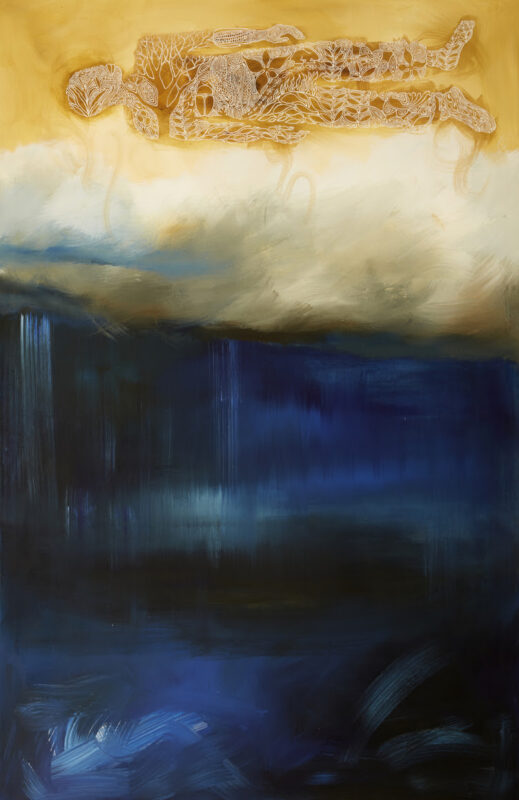
Dowling Walsh also recently highlighted Daniel Minter’s large-scale painting “A clearance of atmospheric disturbances,” which was included in the group exhibition “Sea Change,” on view Aug. 7 to 29.
The painting intersects several lines of thought in Minter’s work.
“It is a seascape that stretches from Sapelo Island in Georgia up to Malaga in Maine, and out into the Atlantic where spirits ride on the turbulent currents,” Minter said.
Inspired by Winslow Homer’s 1899 painting “The Gulf Stream” and the history of Malaga Island, Minter’s work uses shorelines and currents to connect stories of souls and bodies moving across the Atlantic.
Minter is known for painting and assemblage work that frequently addresses displacement and diaspora. His work is featured in the Smithsonian National Museum of African American History and Culture exhibition “In Slavery’s Wake: Making Black Freedom in the World,” which is traveling internationally.
A National Endowment for the Arts travel grant enabled Minter to live and work in Salvador, Bahia, Brazil, where he formed relationships that have continued to inform his life and work.
As founding director of Maine Freedom Trails, Minter has helped draw attention to the history of the Underground Railroad and abolitionist movement in New England. He has also worked to raise awareness of the 1912 forced removal of an interracial community from Malaga Island.
In 2018, Minter co-founded Indigo Arts Alliance, a nonprofit dedicated to cultivating the artistic development of people of African descent. He graduated from the Art Institute of Atlanta and holds an honorary Doctor of Arts from Maine College of Art and Design. He lives and works in Portland.
SCOTT KELLEY
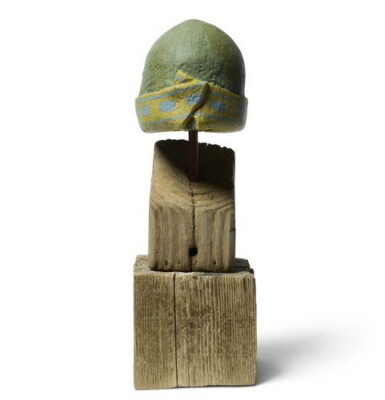
Dowling Walsh’s August exhibition “Scott Kelley: The Whale,” also on view Aug. 7 to 29, grew from the artist’s longstanding engagement with Herman Melville’s 1851 novel “Moby-Dick” and years of research into whaling history.
For the exhibition, Kelley created a series of “Dead Men’s Caps” based on historical examples in the Rijksmuseum in Amsterdam. Each sculpture began as a hand-knit white wool cap that Kelley soaked in resin to harden, then carved and painted by hand. He paired each cap with an individualized stand fashioned from driftwood and copper pipe.
The works drew on an archaeological investigation conducted in 1980 into the graves of 185 whalers, primarily Dutch and English, who died on the Svalbard archipelago between mainland Norway and the North Pole during the late 17th century.
The men were found still wearing knitted wool caps, each differing in color and pattern. Wrapped in layers of clothing against the Arctic cold, the whalers could be distinguished by their individual caps, presumably one reason they had been buried wearing them.
Kelley’s “The Whale” included work in several media exploring his fascination with Melville’s novel, whaling culture and the sea.
Dowling Walsh Gallery is at 357 Main St. in Rockland. The gallery is open from 10 a.m. to 5 p.m. Tuesday through Saturday and by appointment on Sundays and Mondays. Visit www.dowlingwalsh.com, or call 207-596-0084 for more information.
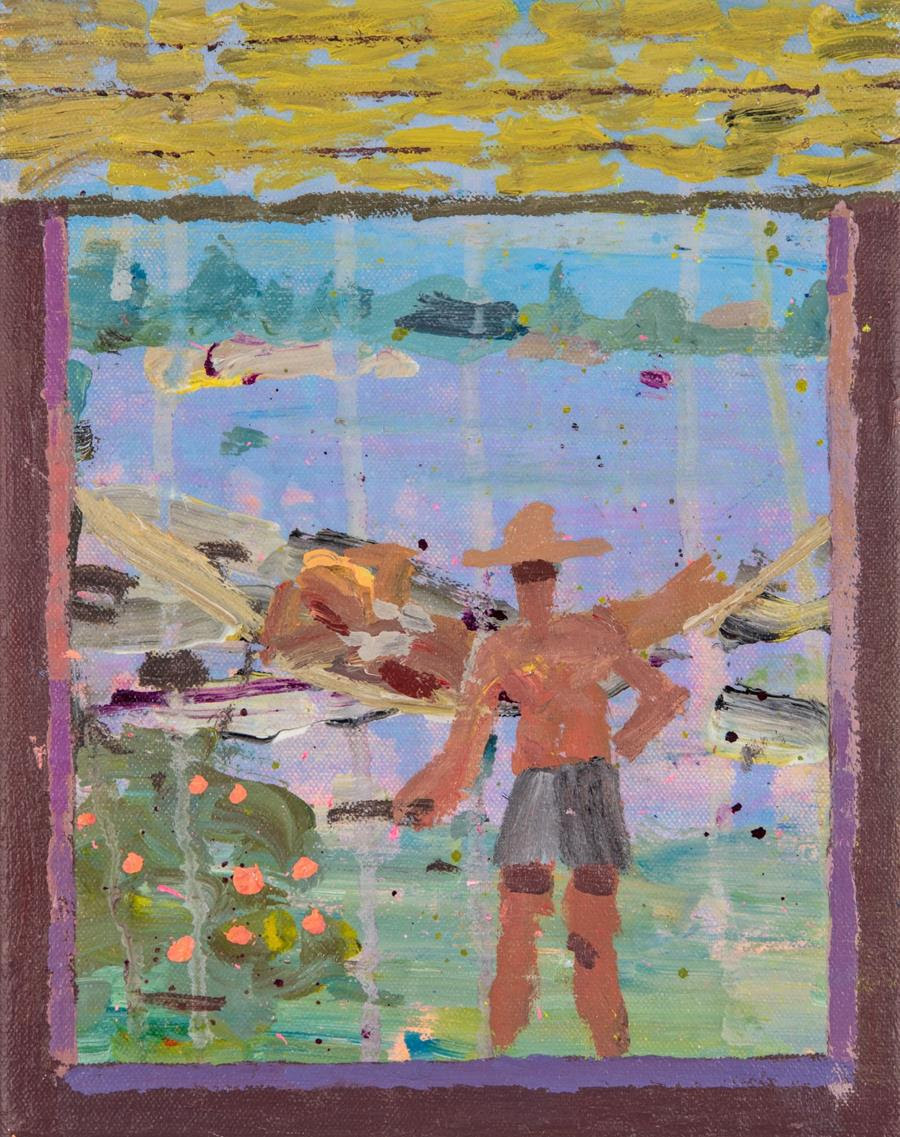
Dowling Walsh Gallery in Rockland is featuring “IDK,” an exhibition of paintings by Tollef Runquist that explores the intersection of personal reflection, archetypes, fantasy and play. Runquist’s paintings combine images and symbols drawn from lived experience, emotional landscapes and cultural influences, creating an intuitive dialogue between imagery and meaning. “My work explores a space where […]
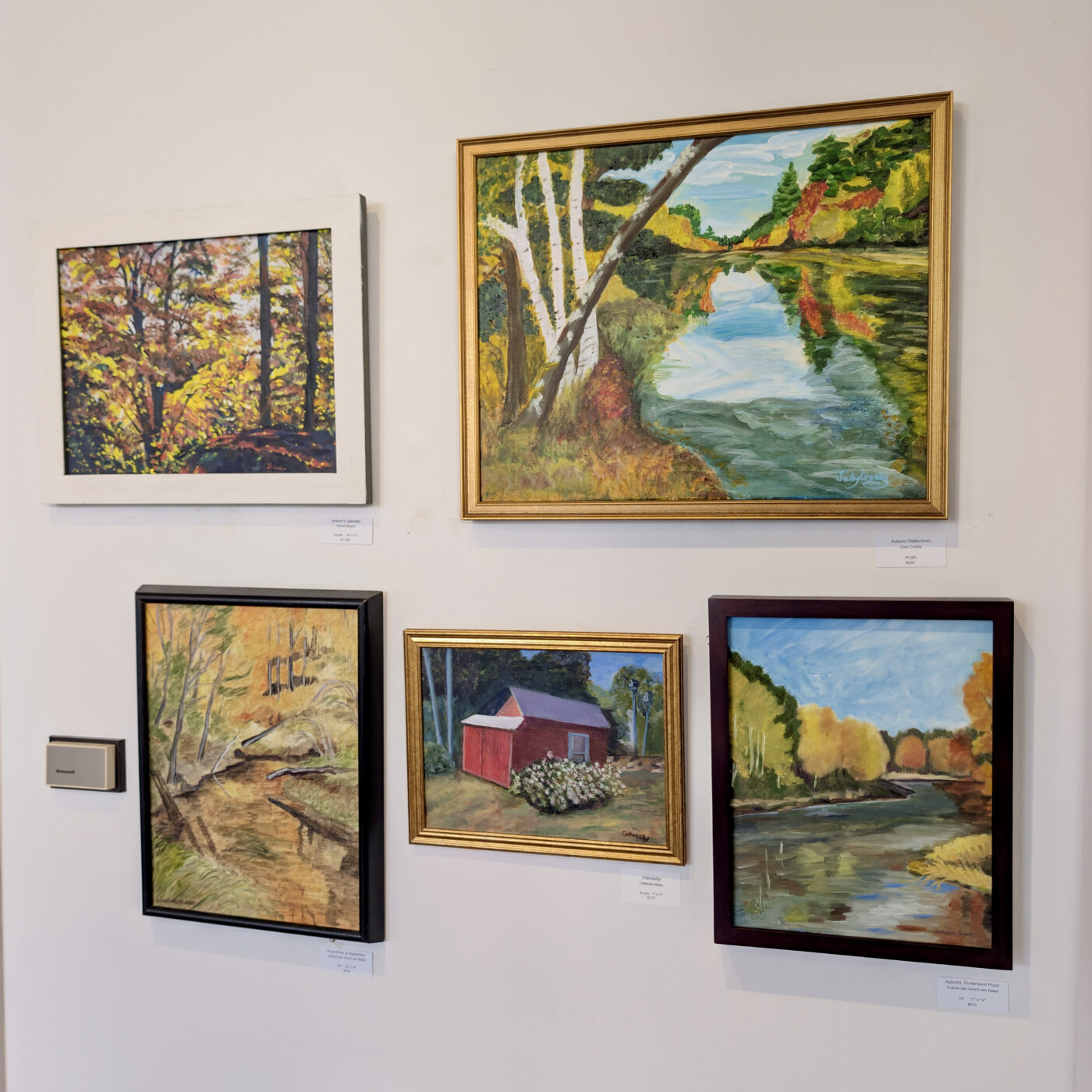
Meetinghouse Arts in Freeport is presenting a full schedule of fall exhibitions and performances, including a members show, a collaborative exhibition by longtime artist friends Tim Sample and Linda Rowell-Kelley and several concerts. The gallery’s fall members exhibition, “Nature’s Palette: Art Inspired by the Season,” will remain on view through Oct. 18. Featuring paintings, drawings, […]
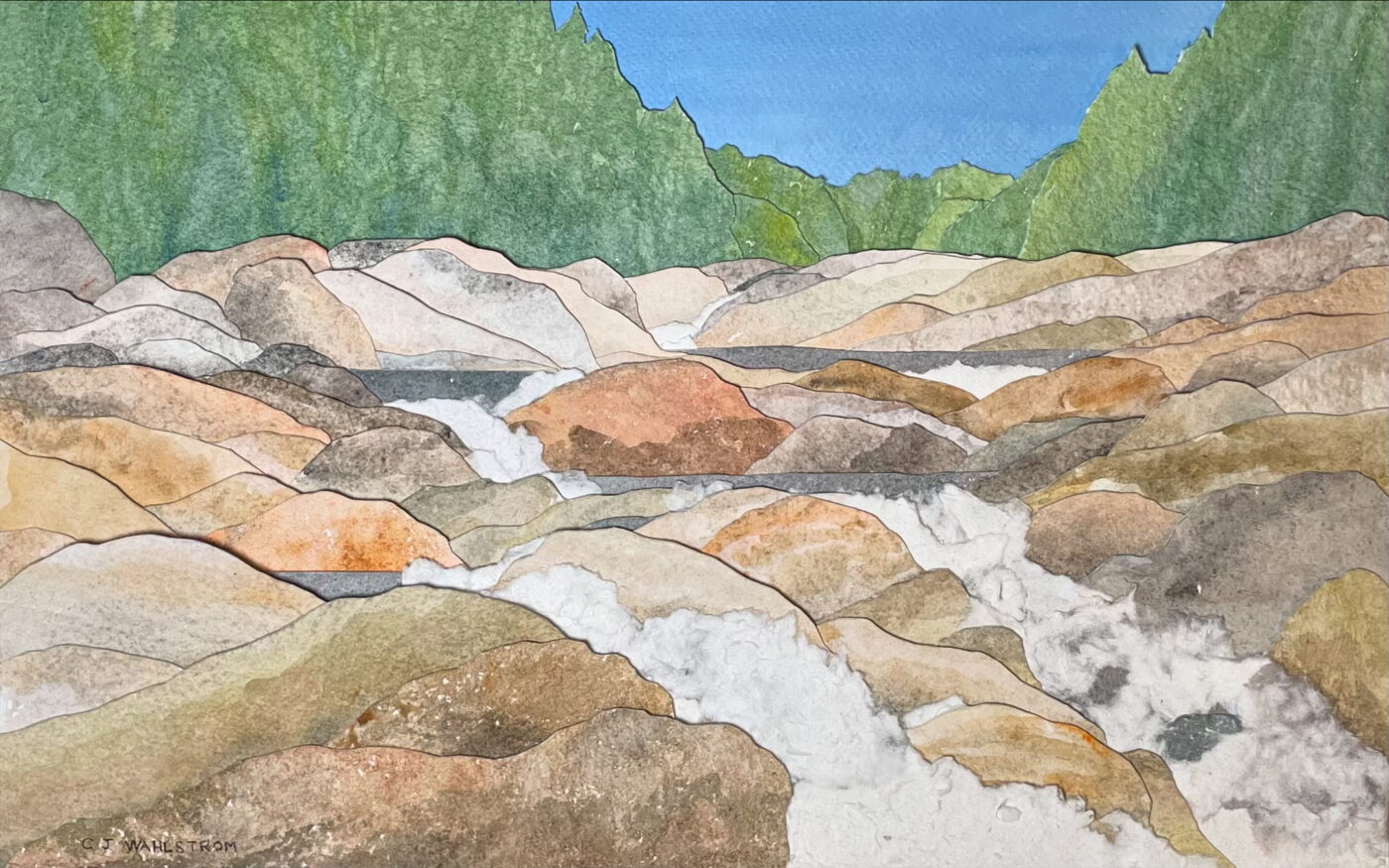
Local Color Gallery in Belfast will feature printmaker, collage artist and sculptor Jeff Wahlstrom from Oct. 19 to Nov. 22. An Art Walk reception will be held from 4 to 7 p.m. Oct. 23, with an artist talk at 5 p.m. Based in Bangor, Wahlstrom creates block prints and watercolor collages inspired by the natural […]
Women Eco Artists Dialog (WEAD), based in Berkeley, California, is accepting submissions for its 2027 members exhibition, “Prototyping Futures of Making: Water, Data, and Living Systems.” The exhibition will explore the relationships among water, data, ecological systems and emerging technologies, asking how artists can engage with living systems as sites of collaboration, construction and consequence. […]
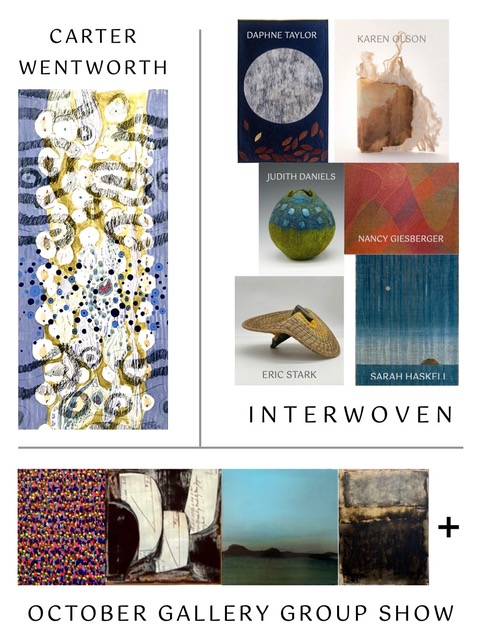
Triangle Gallery in Rockland is presenting three exhibitions through Oct. 31, including an extended solo exhibition by Carter Wentworth, a group fiber arts show and a fall exhibition of work by gallery artists. Wentworth’s “Sound of Rain Crossing the Lake” will remain on view in the upstairs gallery through the end of October. “Interwoven,” a […]
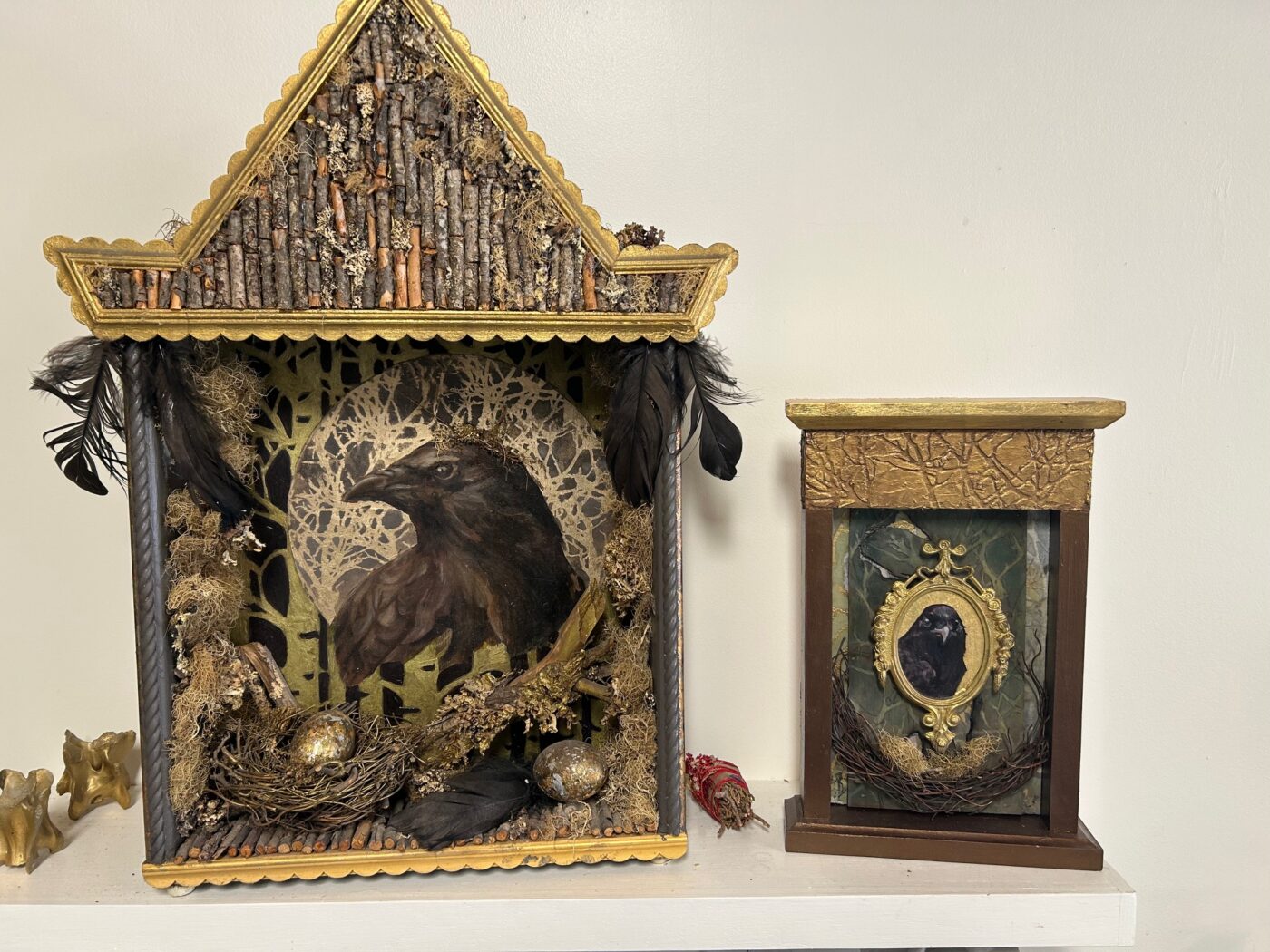
Waterfall Arts in Belfast will present “Found in Translation,” a mixed-media exhibition featuring Maine artists Deborah Jellison, JoAnne Houlsen and John LeBlanc, from Oct. 23 to Nov. 28. An opening reception will be held from 5 to 7 p.m. Oct. 23. The exhibition brings together three artist friends whose work explores familiar Maine landscapes, objects […]
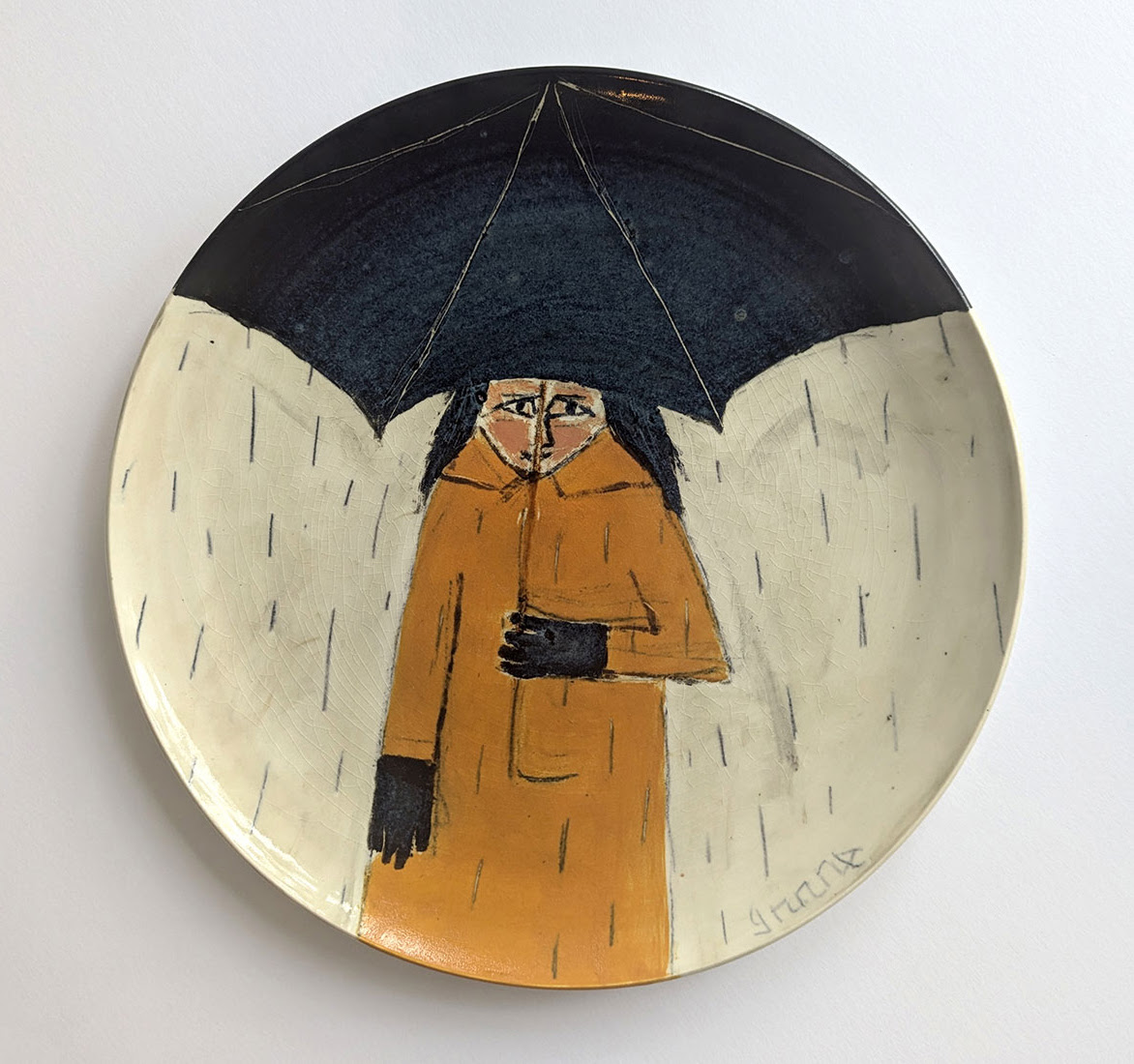
Courthouse Gallery Fine Art in Ellsworth is presenting “Form Meets Surface,” an exhibition highlighting porcelain ceramics by potter Mark Bell and collaborative works created with painter William Irvine. The artists, both established in their respective fields, have worked together since 2015 to create porcelain vases and plates that combine Bell’s ceramic forms with Irvine’s painted […]
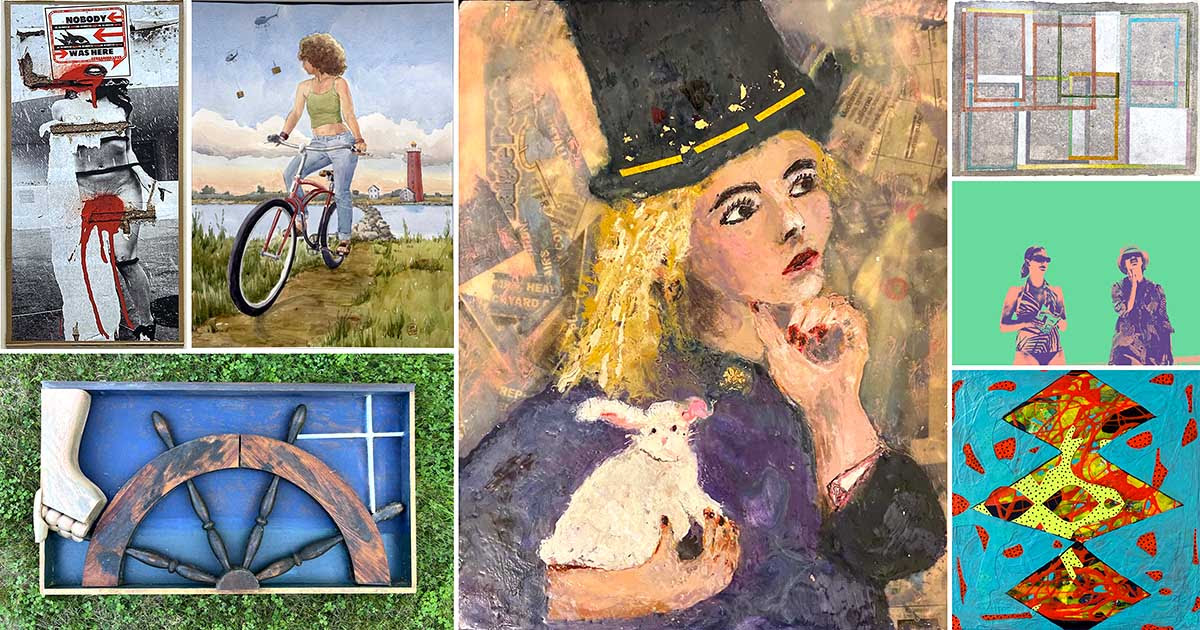
Barn Gallery in Ogunquit concluded its 2026 exhibition season Oct. 12, but the venue will continue to welcome visitors for two performances in the 19th annual Elizabeth Dunaway Burnham Piano Festival. Pianist, composer and vocalist Zahili Zamora will return to Ogunquit with her Afro Cuban Jazz Trio for a performance from 7:30 to 9:30 p.m. […]
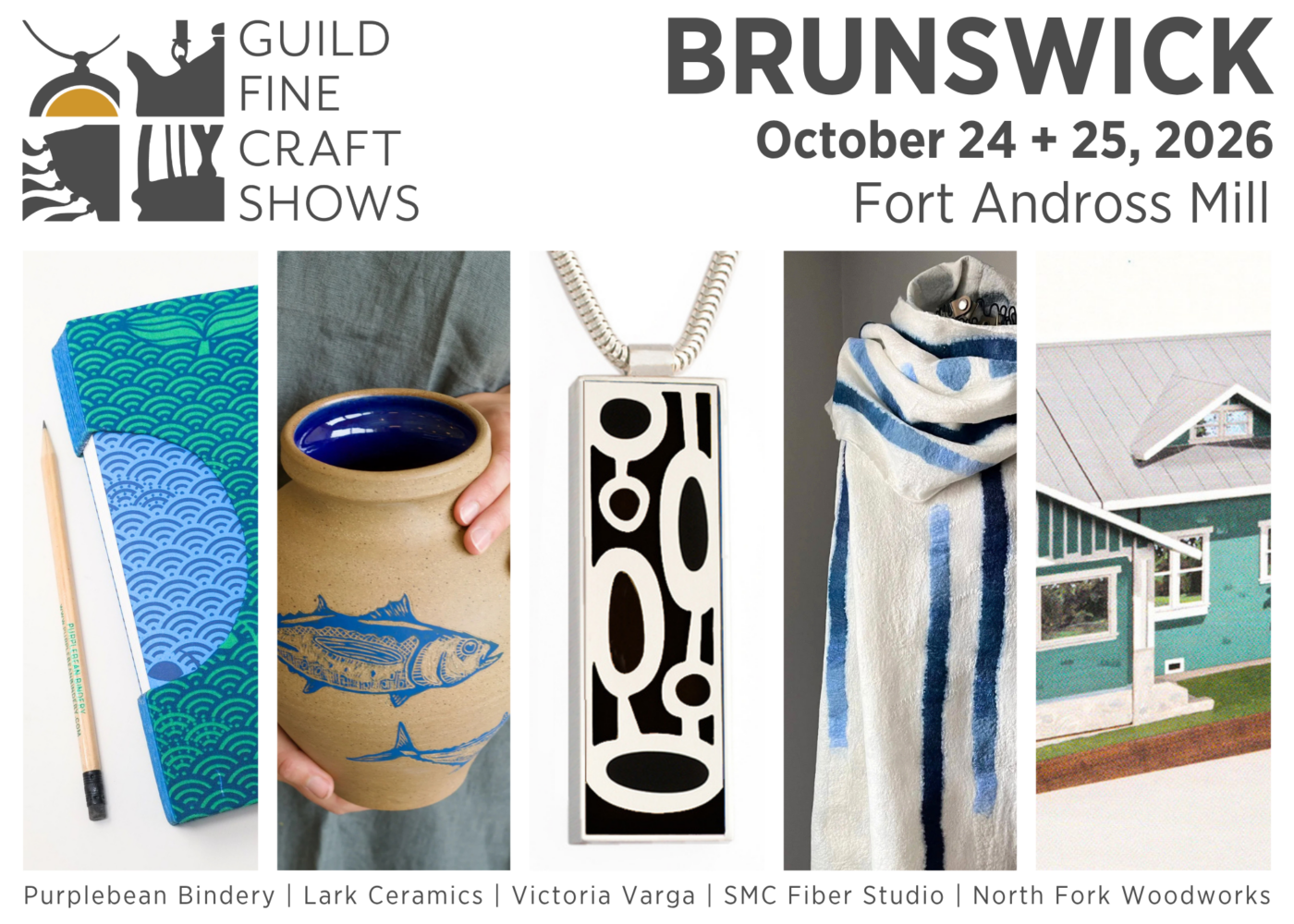
The Brunswick Guild Fine Craft Show will return to the historic Fort Andross Mill in Brunswick on Oct. 24 and 25, celebrating its 10th season with work by 40 juried Maine craft artists. Presented by Shop Maine Craft, the indoor show will feature basketry, ceramics, decorative and wearable fiber art, furniture, glass, jewelry, mixed media, […]

Receive news and information about Maine artists and events delivered right to your inbox.