
Rockland’s Dowling Walsh Gallery will present two exhibitions, “Wolf Kahn: Beyond Intention” and “Richard Estes: Woods and Waters,” from July 3 to Aug. 1.
A public reception will be held from 5 to 7 p.m. July 3.
WOLF KAHN
“Wolf Kahn: Beyond Intention” features selected works by the master American colorist. Kahn depicted the American landscape as a brilliant fusion of color, light and gesture, embracing both representation and his training with the influential Abstract Expressionist artist and teacher Hans Hofmann.
Radical in his approach to color and devoted to experimentation, Kahn asserted, “I’m always trying to get to a danger point in color, where color either becomes too sweet or it becomes too harsh, it becomes too noisy or too quiet, and at that point I still want the picture to be strong, forceful, and the carrier of everything that a painting has to have—contrast, drama, austerity.”
Foundational to Kahn’s approach is his work in oil pastels, a lush, expressive medium that offers direct engagement with his subject and serves as an essential site of experimentation. The artist’s eloquent touch is transmitted through quick, staccato marks and layered veils of color, revealing his handling of the medium he called “dust on butterfly wings.”

Exceptional in his ability to capture fleeting atmospheric effects with deft color and texture, Kahn’s pastel works transcend the specificity of place.
“I’m interested in an overriding rhythm,” he said. “I’m trying to get beyond intention.”
Born in Stuttgart, Germany, Kahn fled Nazi Germany to Britain through the Kindertransport in the late 1930s and immigrated to New York City in 1940, where he graduated from the High School of Music and Art. After serving in the Navy, Kahn began his studies with Hofmann, eventually becoming his studio assistant. In 1950, he enrolled at the University of Chicago, earning his Bachelor of Arts degree. His first solo exhibition in 1953 at the Hansa Gallery in New York was a critical success, and he went on to become one of the most noted colorists in American art.
Kahn’s work has been exhibited at galleries and museums throughout North America. He received a Fulbright Scholarship, a John Simon Guggenheim Fellowship, the Award in Art from the American Academy of Arts and Letters and the Medal of Arts from the State Department. His work is in many museum collections, including The Metropolitan Museum of Art, the Whitney Museum of American Art, the Museum of Modern Art, the Museum of Fine Arts, Boston, the Hirshhorn Museum and Sculpture Garden, the Los Angeles County Museum of Art and the Smithsonian American Art Museum.

RICHARD ESTES
“Richard Estes: Woods and Waters” is the first exhibition of the acclaimed American artist’s work in Maine since his solo exhibition at the Portland Museum of Art in 2021. While that exhibition focused on Estes’ celebrated images of the urban landscape, the exhibition at Dowling Walsh highlights the artist’s intimately observed paintings of the woods and waters surrounding his longtime home on Mount Desert Island and aboard ship on Lake Champlain.
Richard Estes is regarded as one of the founders of the international Photorealist movement that emerged in the late 1960s, along with other artists who used photo-based techniques to achieve hyperrealist effects in their paintings. Estes’ complex paintings, however, offer more than photographic verisimilitude, encompassing multiple interpretations of light and focus that question the relationship between reality and vision.
As Christopher B. Crosman, founding curator of the Crystal Bridges Museum of American Art, wrote of Estes’ work, “…his use of photography for paintings seems to suggest precise replication of photographic sources. His paintings, however, are not that. Instead, Estes often combines views from multiple photographs and slightly shifted perspectives, combining both close-up and background spaces that no human eye, nor the camera, is capable of clearly seeing at the same time in sharp focus.”


Since the late 1960s, Estes has lived and worked in New York and Maine. His close relationship with the wooded landscape and rocky shoreline of Mount Desert Island is revealed in the Acadia Park series, where the dappled forest light, the entanglement of fallen trees and the solidity of stone against the ephemeral sky and water provide the visually complex, near-and-far focus of the artist’s urban compositions.
Estes received his BFA from the Art Institute of Chicago in 1956. Since his artistic debut in 1968, his work has been the subject of many solo exhibitions in the United States and abroad. His work is represented in leading public collections throughout the world, including The Metropolitan Museum of Art, the Museum of Modern Art, the Solomon R. Guggenheim Museum, the Whitney Museum of American Art, the National Gallery of Art, the Smithsonian American Art Museum, the Art Institute of Chicago, the Cleveland Museum of Art, the Detroit Institute of Arts, the High Museum of Art, the Ludwig Museum of Contemporary Art, the National Center for Visual Arts, the Museo Botero, the Tate collections and the Thyssen-Bornemisza Museum.
“Richard Estes: Woods and Waters” at Dowling Walsh is presented in conjunction with Schoelkopf, NYC, where the concurrent exhibition “Richard Estes: My Camera Is My Sketchbook” will be on view from July 17 to Aug. 21.
Dowling Walsh Gallery is at 357 Main St. in Rockland. The gallery is open from 10 a.m. to 5 p.m. Tuesday through Saturday and by appointment on Sundays and Mondays. For more information, call 207-596-0084, email info@dowlingwalsh.com or go to www.dowlingwalsh.com.
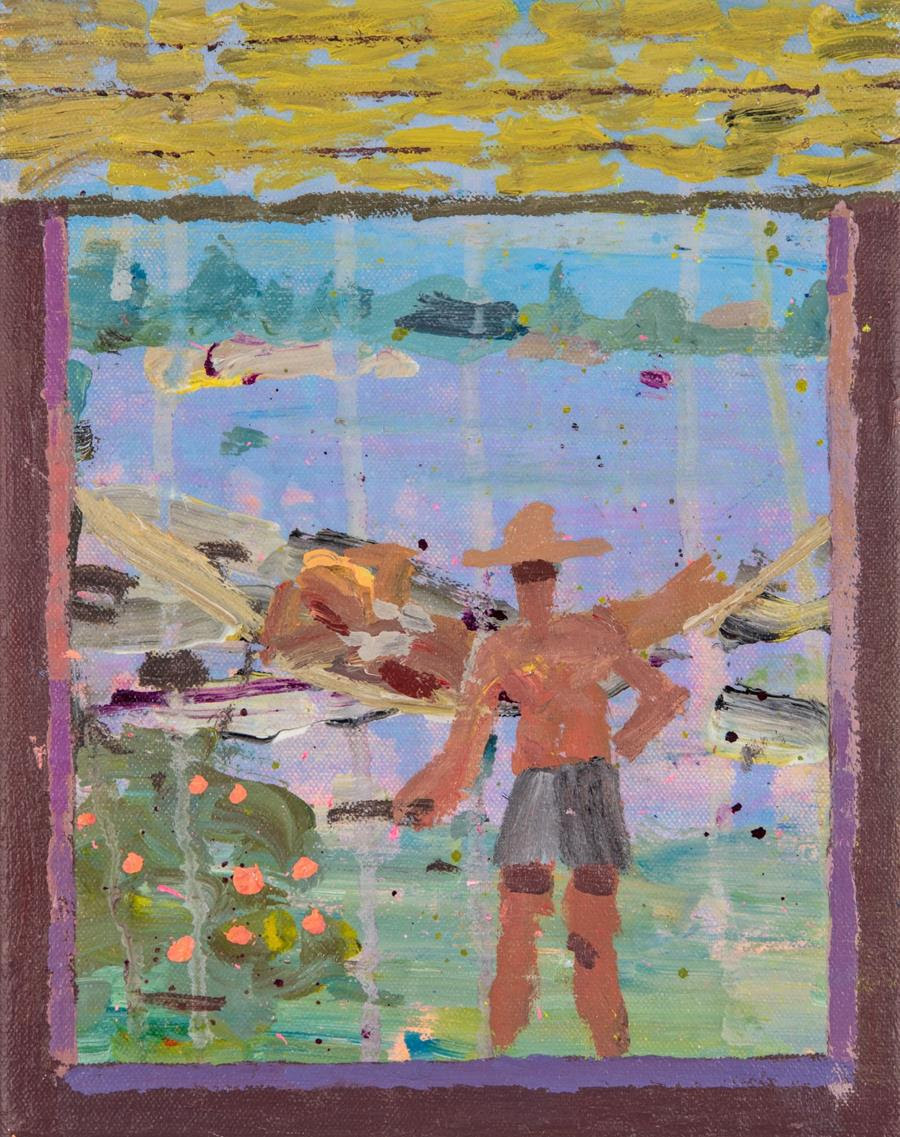
Dowling Walsh Gallery in Rockland is featuring “IDK,” an exhibition of paintings by Tollef Runquist that explores the intersection of personal reflection, archetypes, fantasy and play. Runquist’s paintings combine images and symbols drawn from lived experience, emotional landscapes and cultural influences, creating an intuitive dialogue between imagery and meaning. “My work explores a space where […]
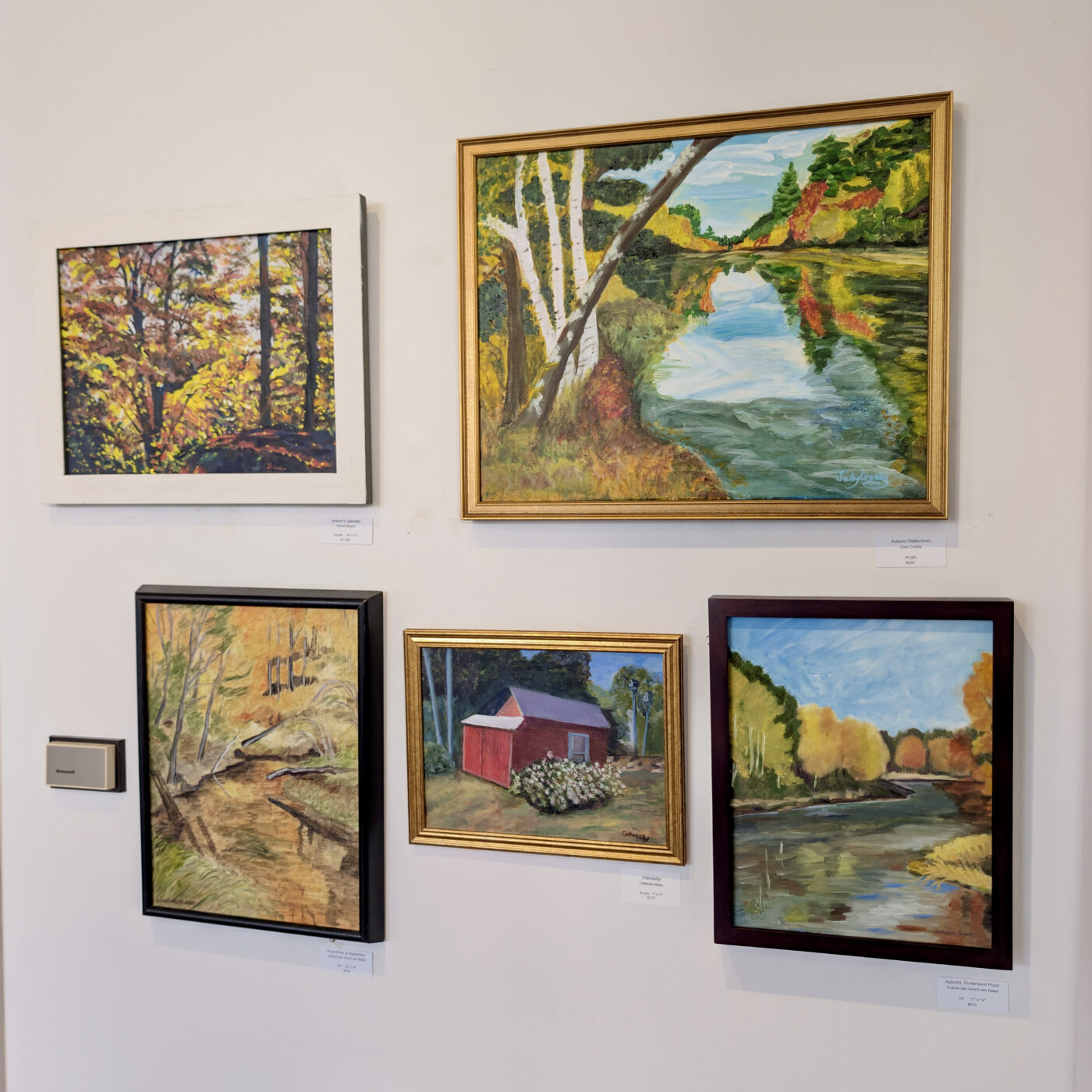
Meetinghouse Arts in Freeport is presenting a full schedule of fall exhibitions and performances, including a members show, a collaborative exhibition by longtime artist friends Tim Sample and Linda Rowell-Kelley and several concerts. The gallery’s fall members exhibition, “Nature’s Palette: Art Inspired by the Season,” will remain on view through Oct. 18. Featuring paintings, drawings, […]
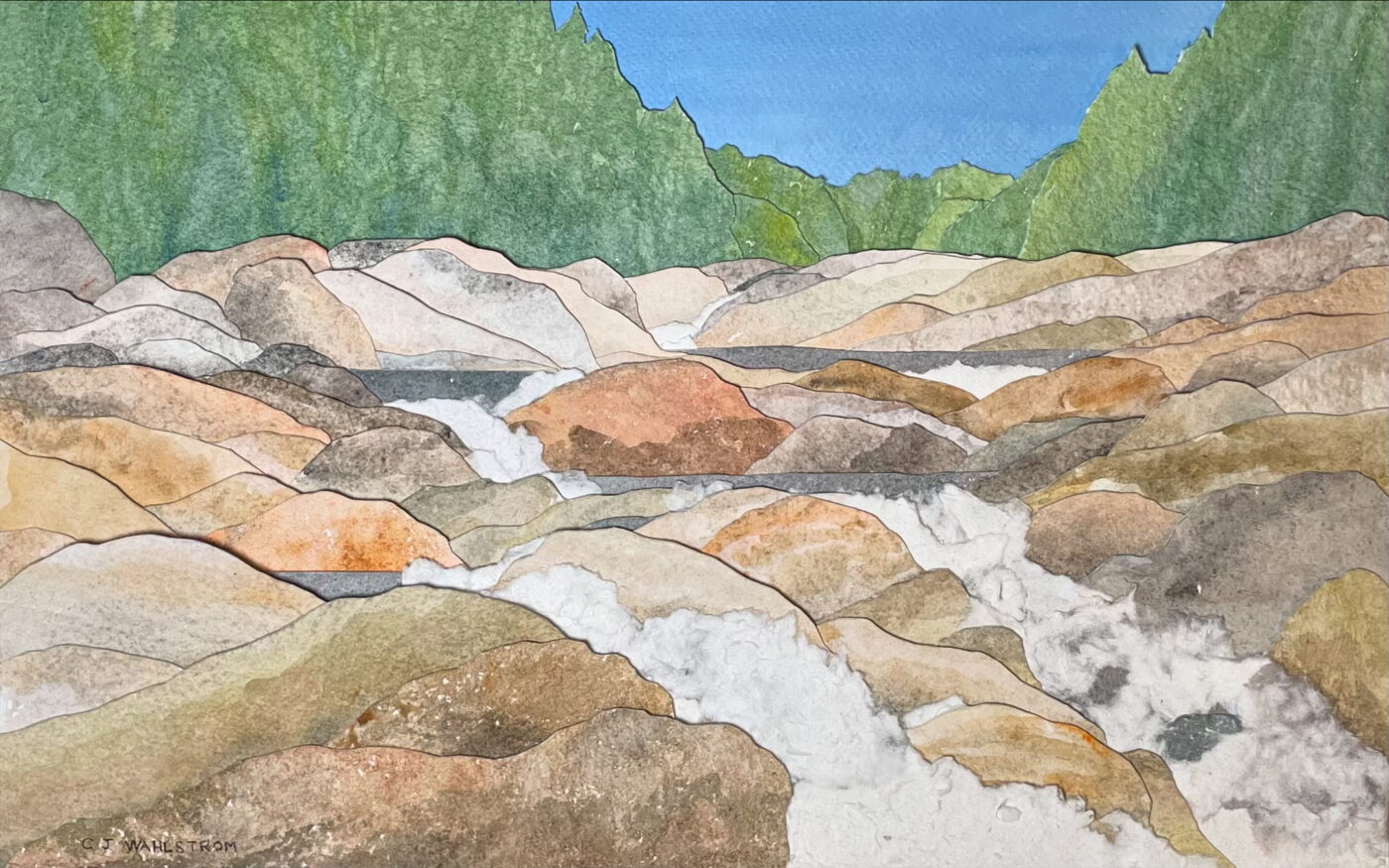
Local Color Gallery in Belfast will feature printmaker, collage artist and sculptor Jeff Wahlstrom from Oct. 19 to Nov. 22. An Art Walk reception will be held from 4 to 7 p.m. Oct. 23, with an artist talk at 5 p.m. Based in Bangor, Wahlstrom creates block prints and watercolor collages inspired by the natural […]
Women Eco Artists Dialog (WEAD), based in Berkeley, California, is accepting submissions for its 2027 members exhibition, “Prototyping Futures of Making: Water, Data, and Living Systems.” The exhibition will explore the relationships among water, data, ecological systems and emerging technologies, asking how artists can engage with living systems as sites of collaboration, construction and consequence. […]
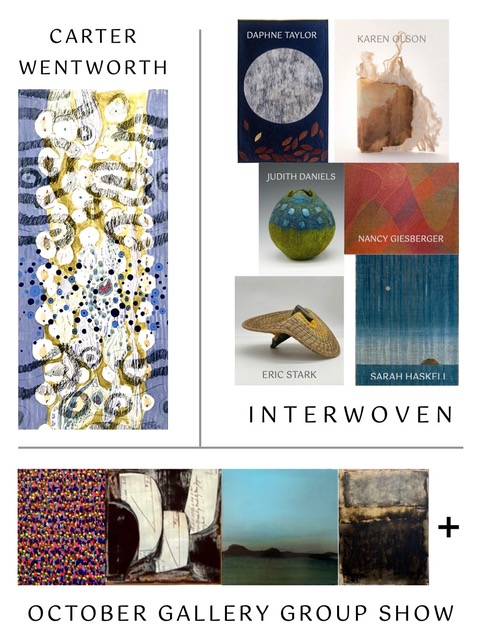
Triangle Gallery in Rockland is presenting three exhibitions through Oct. 31, including an extended solo exhibition by Carter Wentworth, a group fiber arts show and a fall exhibition of work by gallery artists. Wentworth’s “Sound of Rain Crossing the Lake” will remain on view in the upstairs gallery through the end of October. “Interwoven,” a […]
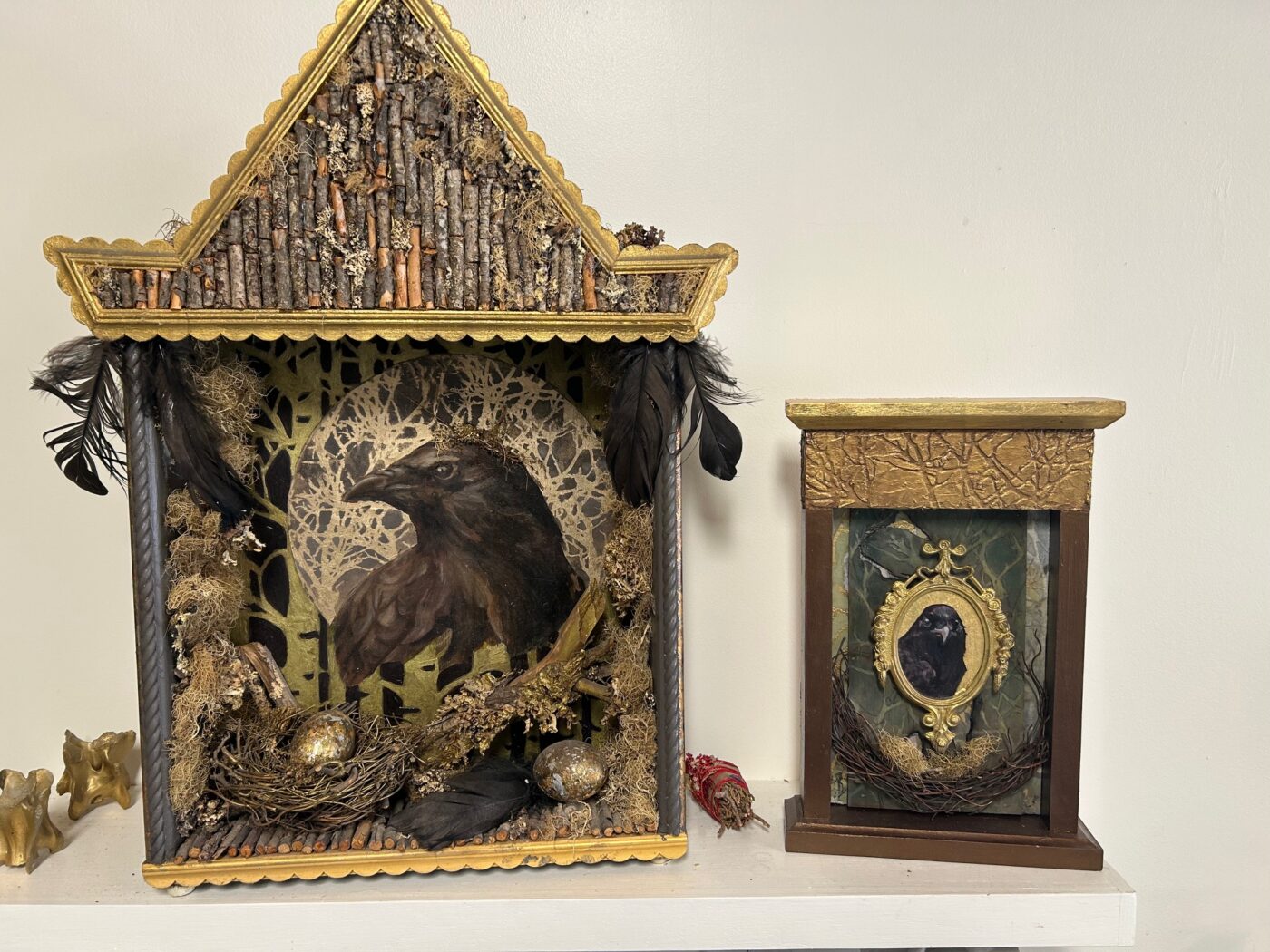
Waterfall Arts in Belfast will present “Found in Translation,” a mixed-media exhibition featuring Maine artists Deborah Jellison, JoAnne Houlsen and John LeBlanc, from Oct. 23 to Nov. 28. An opening reception will be held from 5 to 7 p.m. Oct. 23. The exhibition brings together three artist friends whose work explores familiar Maine landscapes, objects […]
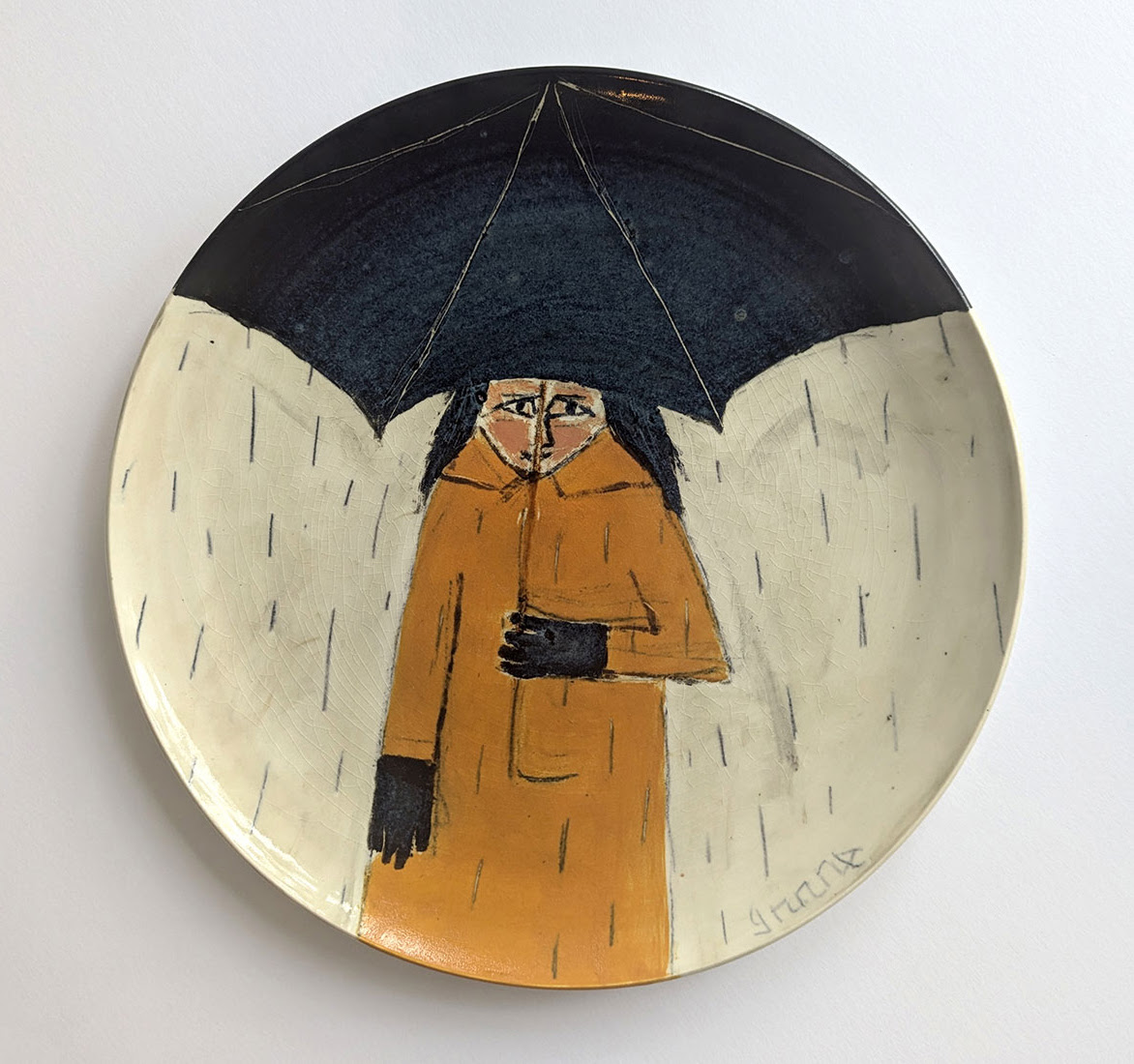
Courthouse Gallery Fine Art in Ellsworth is presenting “Form Meets Surface,” an exhibition highlighting porcelain ceramics by potter Mark Bell and collaborative works created with painter William Irvine. The artists, both established in their respective fields, have worked together since 2015 to create porcelain vases and plates that combine Bell’s ceramic forms with Irvine’s painted […]
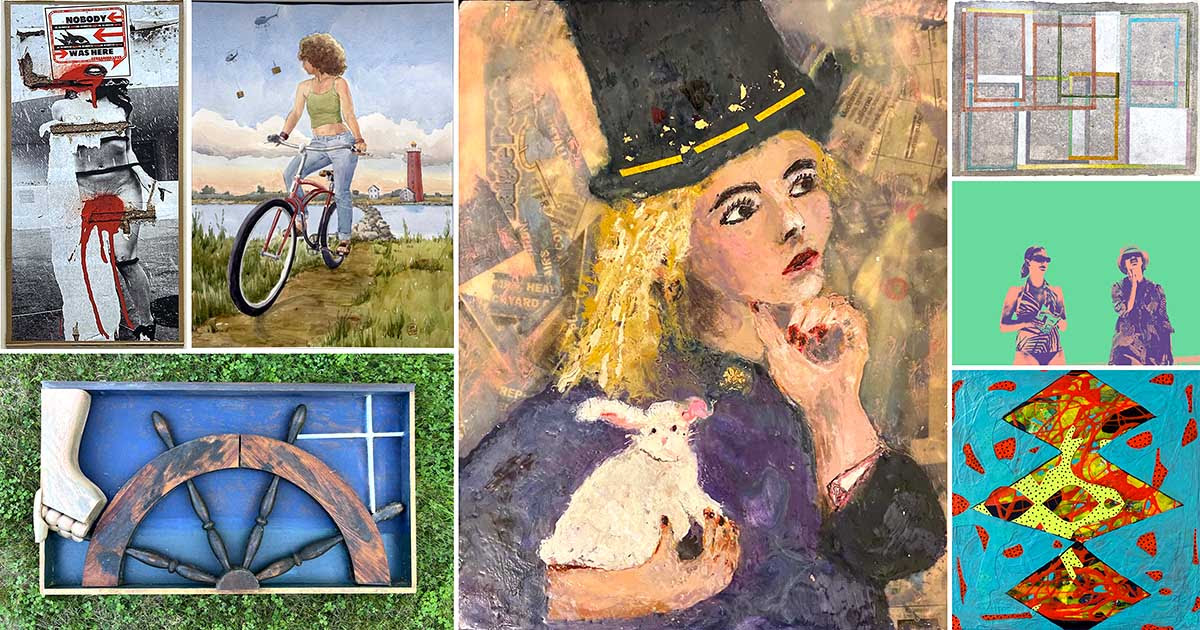
Barn Gallery in Ogunquit concluded its 2026 exhibition season Oct. 12, but the venue will continue to welcome visitors for two performances in the 19th annual Elizabeth Dunaway Burnham Piano Festival. Pianist, composer and vocalist Zahili Zamora will return to Ogunquit with her Afro Cuban Jazz Trio for a performance from 7:30 to 9:30 p.m. […]
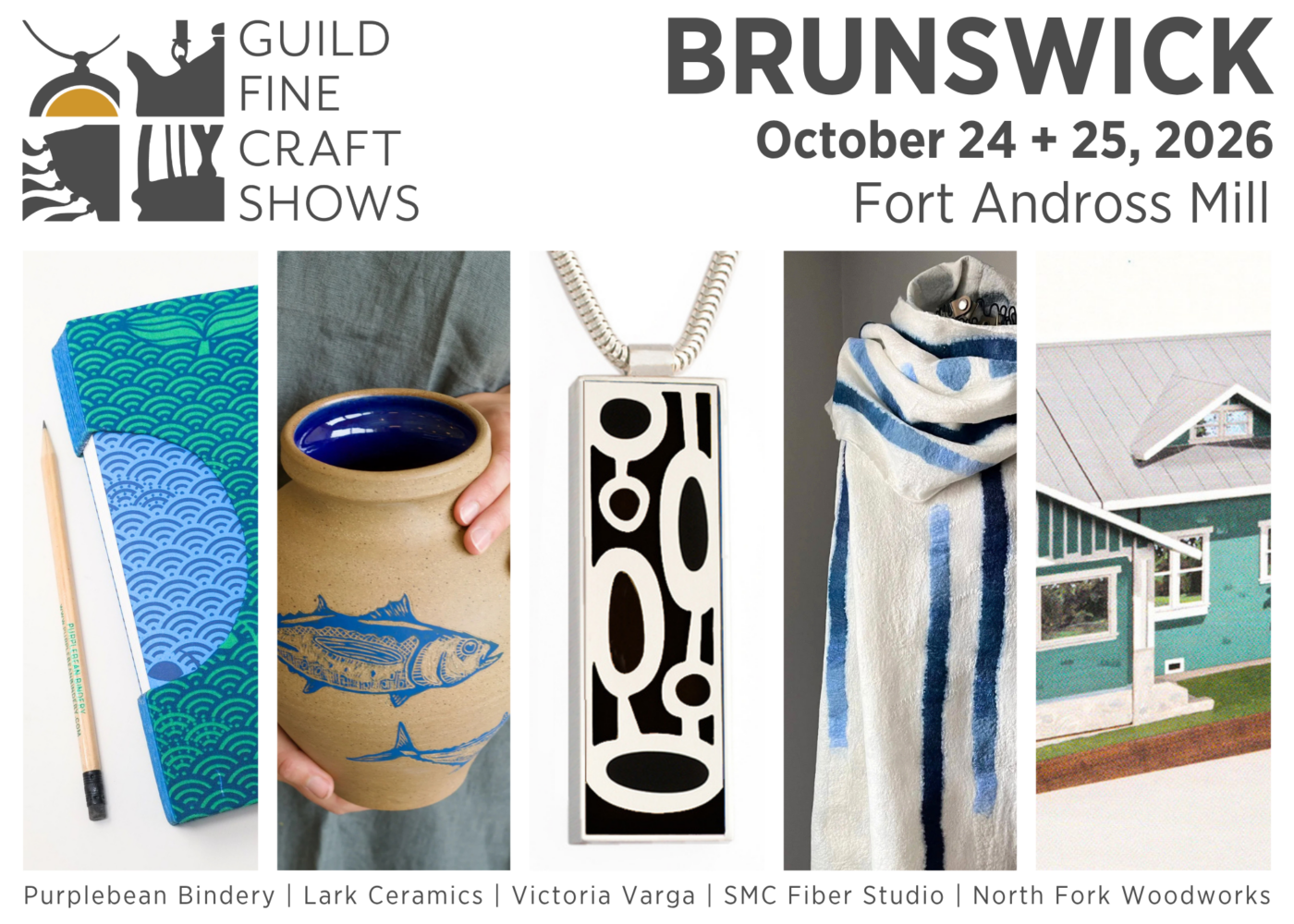
The Brunswick Guild Fine Craft Show will return to the historic Fort Andross Mill in Brunswick on Oct. 24 and 25, celebrating its 10th season with work by 40 juried Maine craft artists. Presented by Shop Maine Craft, the indoor show will feature basketry, ceramics, decorative and wearable fiber art, furniture, glass, jewelry, mixed media, […]

Receive news and information about Maine artists and events delivered right to your inbox.