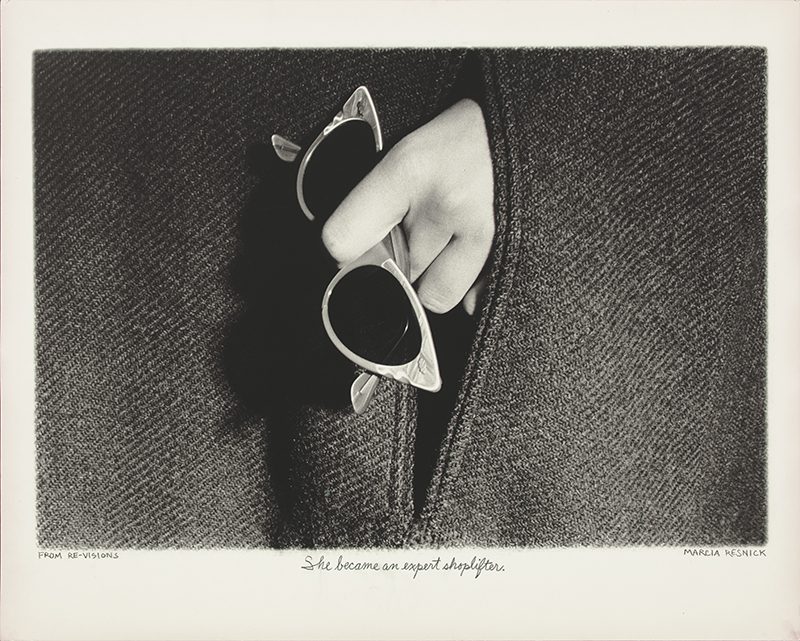
The Bowdoin College Museum of Art, in collaboration with the Minneapolis Institute of Art and the George Eastman Museum, announces the first-ever museum exhibition of the photographer Marcia Resnick.
One of the most innovative American photographers of the 1970s, Resnick is today most well-known for her portraits of the creative community in downtown New York City during that decade. “Marcia Resnick: As It Is Or Could Be” will feature these portraits alongside the artists’ less-known experimental and conceptual photographs, highlighting Resnick’s overlooked role in the history of American photography while emphasizing the continued relevance of the aesthetic, social and political issues explored through her lens.
Co-curated by Frank Goodyear, co-director of BCMA; Casey Riley, chair of Global Contemporary Art and Curator of Photography & New Media at Mia; and Lisa Hostetler, former curator in charge, Department of Photographs at the Eastman Museum, the exhibition will premiere at BCMA from Feb. 24 through June 5, before being presented at Mia (Aug. 13 through Dec. 11) and the Eastman Museum (Feb. 10 through June 18, 2023).
“Resnick’s ambition and innovation were unparalleled among American photographers of the 1970s. In just over a decade, she produced a body of work that spanned experimental, conceptual, documentary and editorial photographic practices, as well as four distinctive photographic artist’s books,” said Goodyear. “Despite her role in expanding our contemporary view of photography, and although her work has been collected by many museums, including the Museum of Modern Art and the National Portrait Gallery, it has never been the focus of a retrospective exhibition. Casey, Lisa and I are thrilled to have the opportunity to research, exhibit, and publish Resnick’s work comprehensively for the first time, and to do so with the artist’s input and enthusiasm.”
Born in Brooklyn in 1950, Resnick began her undergraduate studies at New York University, where she took her first photographs, documenting people and current events, such as antiwar demonstrations. In 1969, she transferred to Cooper Union, where she began experimenting with photographic materials and first encountered Allan Kaprow’s Happenings. Intrigued by Kaprow’s desire to challenge the traditionally distinct realms of art while blurring life with his artistic practice, she pursued graduate study with him at the California Institute of the Arts, where she also encountered and studied with John Baldessari and Robert Fichter. It was while at CalArts that Resnick began pushing the boundaries of traditional photography, applying oil paint to her images and toying with the scale of her photographs, at times expanding them to billboard-size. A number of works from Resnick’s student years, including a painted photograph of her parents, are featured in “As It Is Or Could Be.”
In 1973, having completed her MFA, Resnick embarked on a cross-country road trip with her friend and fellow photographer James Welling. While traveling with Welling, she photographed him from behind overlooking the Grand Canyon. Excited by the chain of spectators created by the image (the viewer is seeing what Resnick observes while Welling looks out at the landscape), Resnick decided to explore this telescoping effect further through her series “See” (1973-1975) of various people seen from behind while observing diverse landscapes. In her subsequent series “See Change” (1974-1975), Resnick continued to probe the conceptual possibilities of photography by experimenting with the impact of small interventions in the original “See” photographs, including drawing or painting on them, or cutting out fragments. Both series are represented in the exhibition, as are the four photobooks Resnick produced between 1975 and 1978: “See,” “Tahitian Eve,” “Landscape” and “Re-visions.”
While the history of the photobook genre is usually presented through male photographers such as Robert Frank, Ed Ruscha and Garry Winogrand, “As It Is Or Could Be” questions this narrative. Both the exhibition and the accompanying catalogue, in an essay by co-curator Casey Riley, emphasize Resnick’s contributions to the development of the form and explore the feminist themes present in her photobooks. Further challenging traditional ideas about how photographic artwork should be presented, in “Re-visions,” the artist began experimenting with adding short texts to her photographs. In this series, Resnick began to develop a distinctive verbo-visual language that often blurred social commentary and humor, a voice she would later develop during her time at Soho Weekly News.
In 1979, Resnick began working as a staff photographer for SWN, an alternative newsweekly founded in 1973 that hoped to compete with the Village Voice. From 1979 until the magazine’s demise in 1982, Resnick’s portraits were included in almost every issue of the magazine, at times on its cover. While at SWN, Resnick photographed various famous figures, including authors William Burroughs and Allen Ginsberg, musicians James Brown and Mick Jagger, artists Christo and Andy Warhol, activist Abbie Hoffman and New York City mayor Ed Koch, among many others. She also photographed many emerging cultural figures who would go on to become household names, such as composer Philip Glass, artist Laurie Anderson and musician Fab 5 Freddy. Resnick’s ability to draw out her subject, as well as her personal relationships with some of these figures, resulted in intimate portraits which capture a lesser-known side of these celebrities.
As Resnick photographed those in the downtown scene, she also embarked on a new series titled “Bad Boys,” in which she flipped the traditional dynamic of men looking at women by turning her lens to men and probing the idea of the “bad boy.” “As It Is Or Could Be” features a number of celebrity portraits and “bad boy” photographs, as well as works from “Resnick’s Believe-It-or-Not,” a regular column she was commissioned to produce for SWN’s humorous Centerfold section. As in “Re-visions,” Resnick carefully combined text and image to produce witty and humorous commentary, often exploring what it was like to live in New York City.
Following a number of personal and societal shifts — including the demise of Soho Weekly News, a difficult divorce and the drastic changes in the cultural scene of downtown New York — Resnick focused her energies on teaching. Though she stopped actively producing photographs in the early 1980s, Resnick’s work endures as far more than a record of the 1970s cultural scene in New York: it is a testament to the innovation and creativity that stems from eschewing tradition and pushing boundaries. “Marcia Resnick: As It Is Or Could Be” and the accompanying catalogue, published by Yale University Press in association with Bowdoin College Museum of Art, the Minneapolis Institute of Art and the George Eastman Museum, aims to bring to the fore Resnick’s overlooked role in the history of American photography. The catalogue includes essays by the three co-curators as well as an afterword by Laurie Anderson.
Bowdoin College Museum of Art is at 245 Maine St., Brunswick. Call 207-725-3275, or go to www.bowdoin.edu/art-museum for more information.
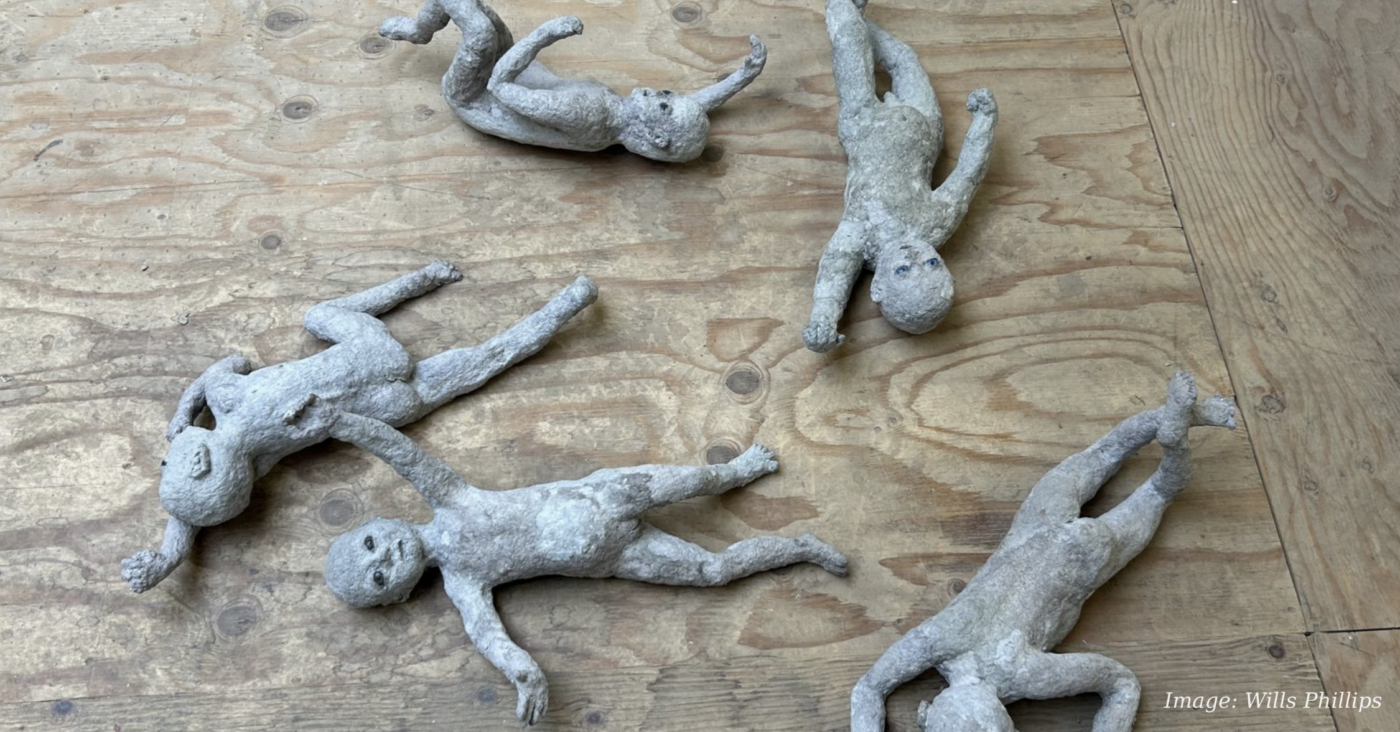
The Tree That Became Everything August 15 – September 12 This Temporary Space in Thomaston is pleased to present The Tree That Became Everything, a two-person exhibition featuring Sophie Anna Gibbings and Wills Phillips. A public opening reception will be held on Saturday, August 15, from 3-6pm. Does a tree persist long after it […]

Discover artful objects to live with, wear, and cherish! Shop Maine Craft is excited to welcome visitors to the 11th Annual Portland Fine Craft Show in its new home at Lincoln Park on Saturday, August 22, 2026, from 10:00 am to 5:00 pm. Free and open to the public, the show brings together 100 juried […]

Plein air and Art of Alchemy shows wow the crowd Plein air and Art of Alchemy shows wow the crowd “The annual plein air show at Maine Art Gallery is always something special,” an artist selected for the exhibit commented at the opening reception last Saturday. “We get to go out and do the […]

Triangle Gallery in Rockland presents “Small Objects, Large Gestures,” featuring work by Judith Hoyt, Donna D’Aquino, Gene Shaw, Thomas Hill, Myung Urso, Mark Hartung, and Lisa & Scott Cylinder, is curated by Mike Holmes of Velvet Davinci Gallery. This show brings together old friends from the now-retired gallery and adds one familiar name, Gene Shaw. […]
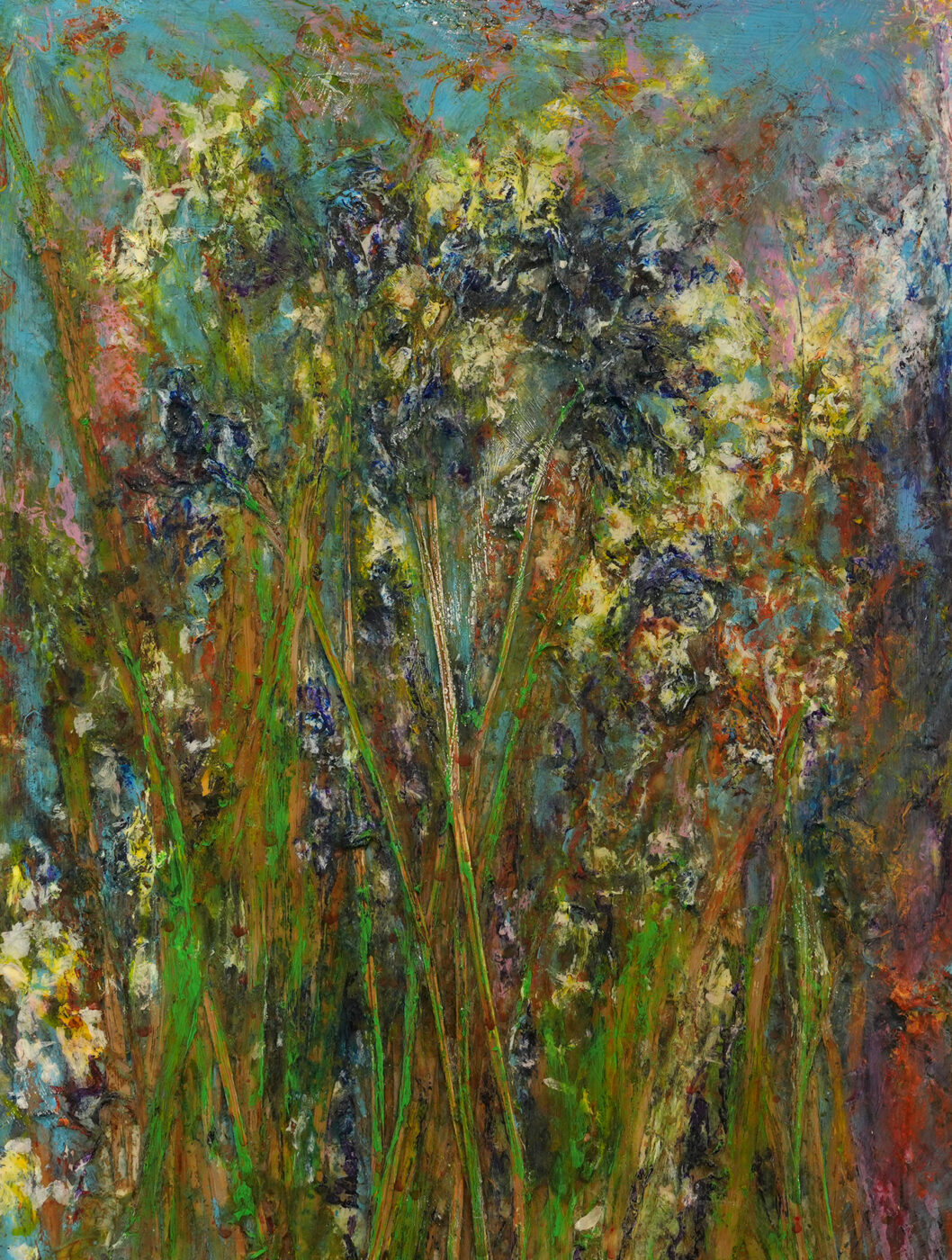
The Kittery Art Association presents “Atmosphere,” an exhibition exploring the invisible forces that shape perception, energy and emotion, through Aug. 30 in Kittery. The exhibition invites artists to interpret experiences such as the electricity of connection, the calm before a storm and the stillness of a misty morning, transforming what is felt into something that […]
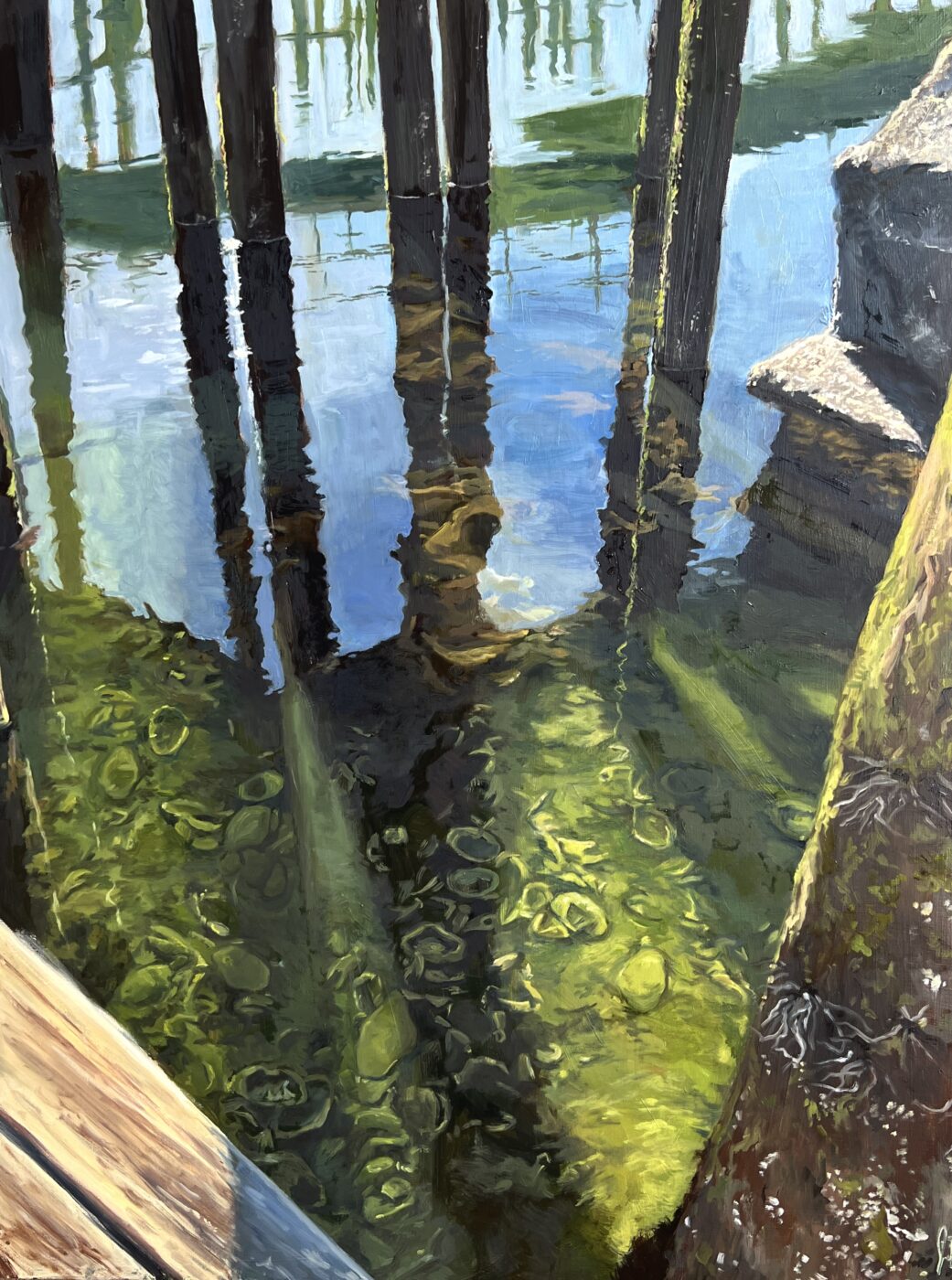
Turtle Gallery in Deer Isle will present an exhibition featuring work by Jadyn LaDeau, Adele Ursone and Sara Hotchkiss from Aug. 12 through Sept. 6. An open house will be held from 2 to 5 p.m. Aug. 16, with a gallery talk at 3 p.m. Rooted in the tidal rhythms of Stonington, LaDeau paints the […]
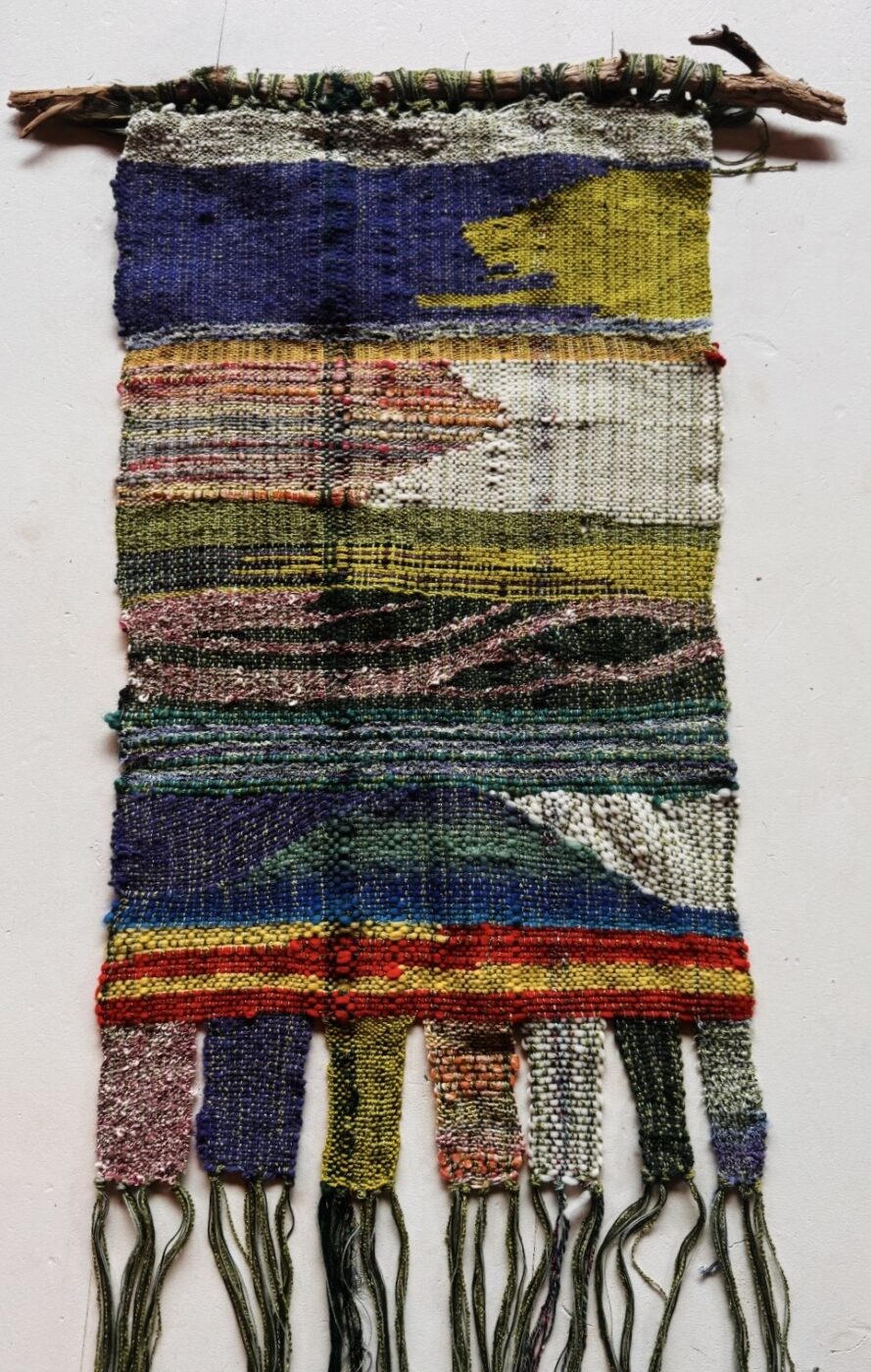
The Deer Isle Artists Association presents “Expressions,” an exhibition showcasing a range of artistic perspectives and evocative styles, through Aug. 16 at its gallery in Deer Isle Village. The exhibition includes painting, printmaking, photography, weaving and woodwork by Marianne Alweis, Sarah Baskin, Sue Bolton, Ray Dinsmore, Steve Ettlinger, Mary Gage-Los, Jeri Gillin, Emily Johansen, Susan […]
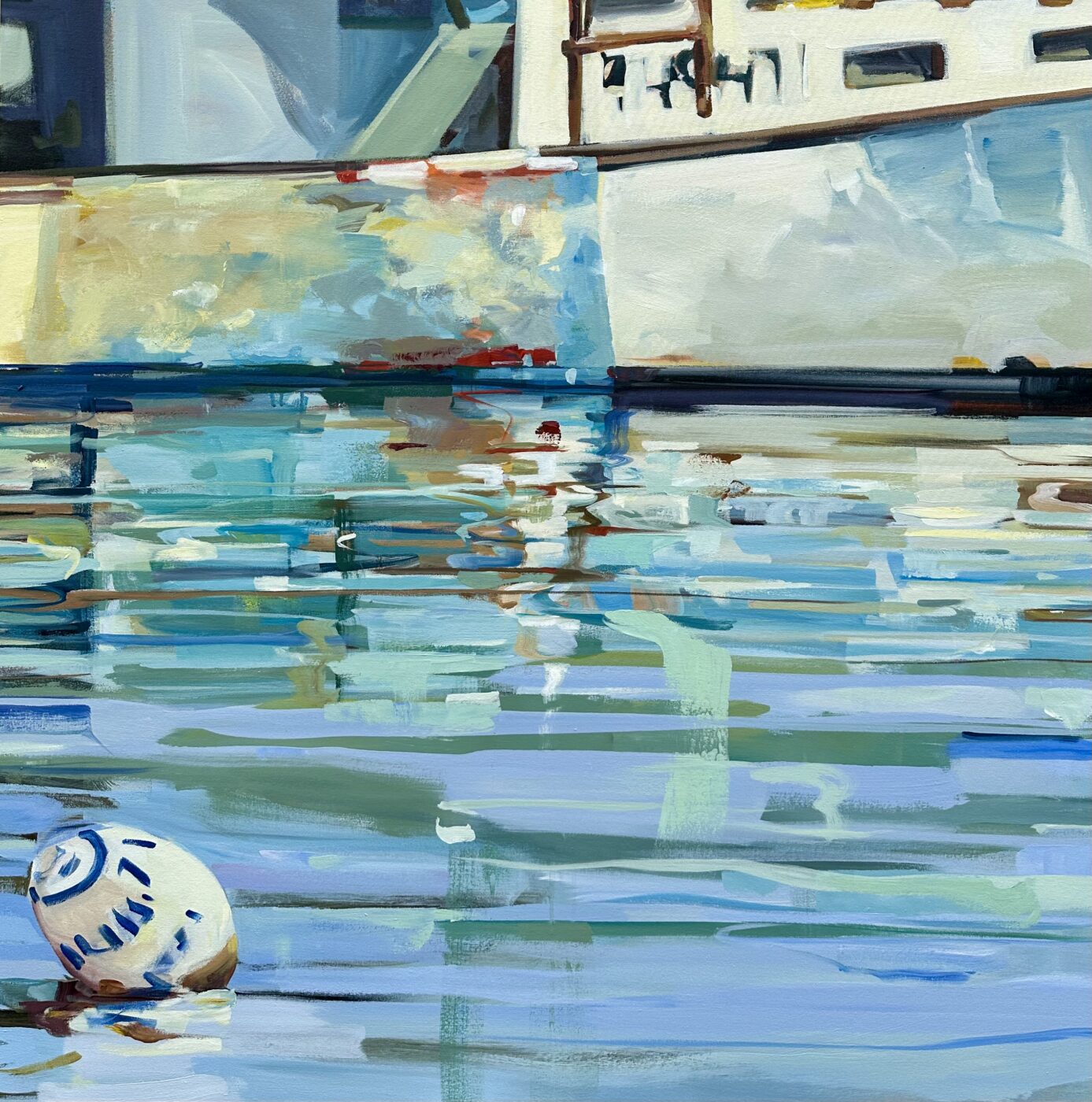
Landing Gallery in Rockland presents “Just Passing Through,” an exhibition of 38 paintings by Liz Prescott, from Aug. 7 through Sept. 20. An opening reception will be held from 4 to 7 p.m. Aug. 7 during Rockland’s First Friday Art Walk. The exhibition features a series of acrylic paintings inspired by Prescott’s time paddling and […]
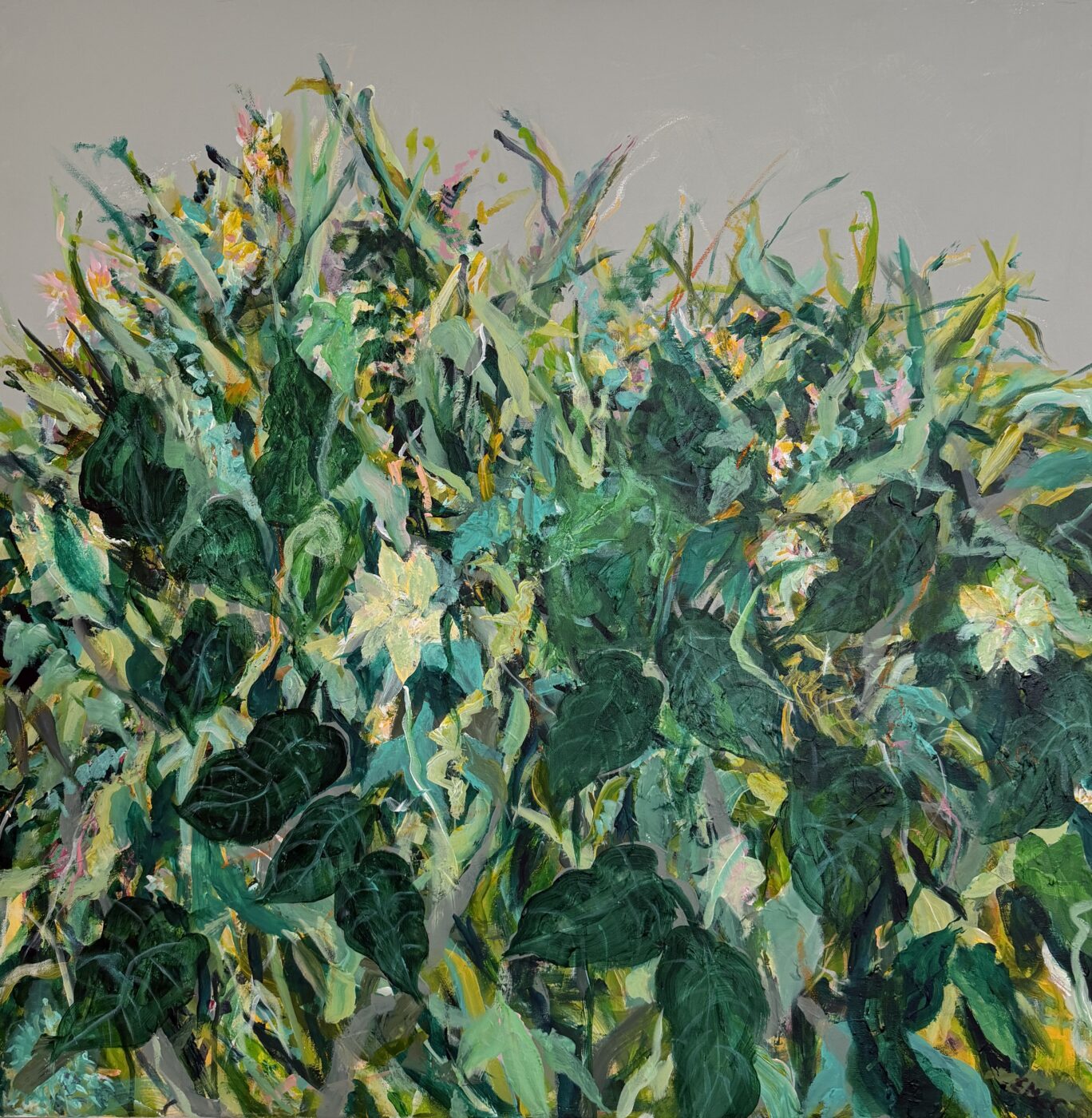
Centre Street Arts Gallery in Bath presents a new summer exhibition featuring work by 22 local Midcoast artists. The exhibition includes work by Jillian Herrigel, Lee Liggett, Tara Dixon, Ed McCartan, Judy Conlan and Livy Glaubitz. The gallery will welcome visitors during the Bath Art Walk from 4 to 7 p.m. Aug. 21. Centre Street […]

Receive news and information about Maine artists and events delivered right to your inbox.